In a nutshell
- 🧴 The pro-approved vinegar trick: use 1:1 white vinegar and distilled water (2:1 for hard-water spots), applying a light mist for a streak-free finish.
- 🧪 Why it works: acetic acid dissolves alkaline residues (minerals, soap film) and evaporates quickly, reducing streaks; never mix vinegar with bleach.
- 🧽 Technique matters: clean top-to-bottom with S-strokes, use plush microfibre to wash and a separate tight-weave cloth to buff; a squeegee excels on large panes.
- ⚠️ Avoid pitfalls: skip paper towels, don’t over-wet or work in direct sun; use distilled water in hard-water areas and launder cloths without fabric softener.
- 🚿 Beyond windows: protect stone from acids, spray the cloth for mirrors to save edges, de-grease shower screens patiently, and clean car glass without ammonia for tint safety.
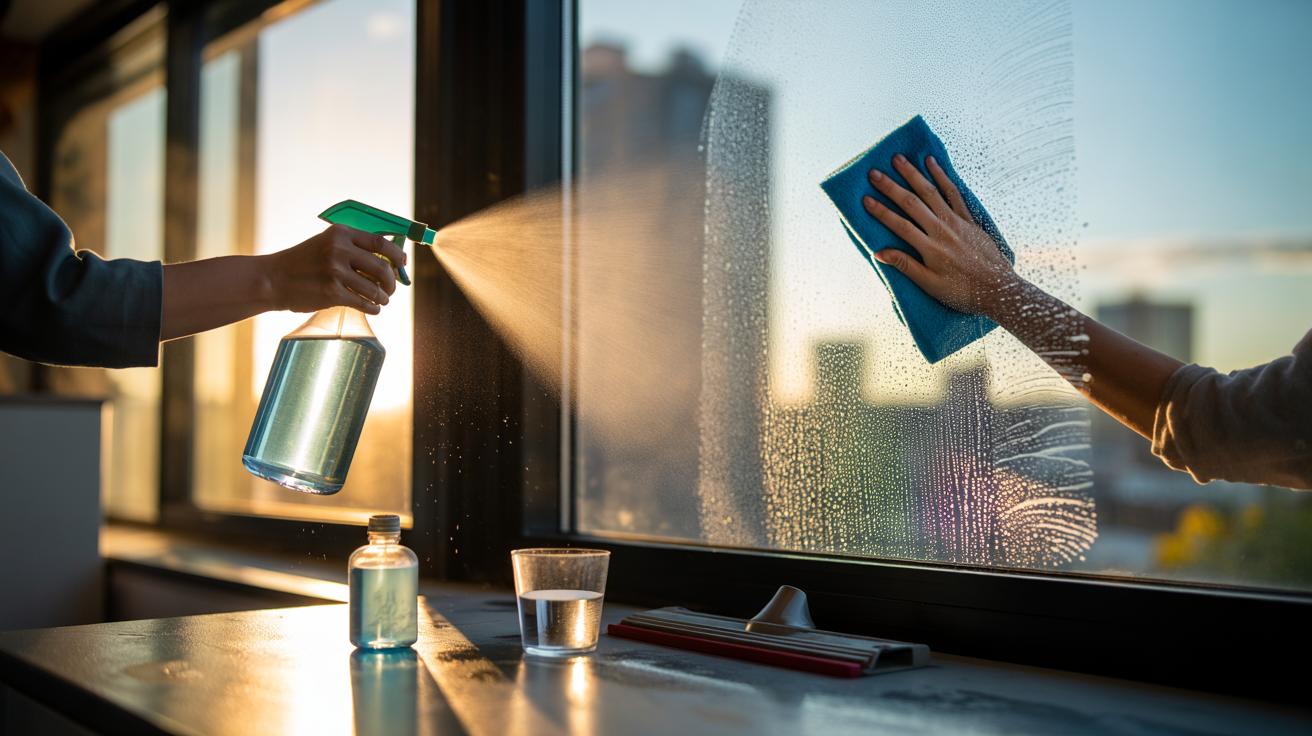
Professional window cleaners have a quietly reliable secret. It isn’t an exotic chemical or a spendy spray. It’s vinegar. When used with the right water, cloth, and technique, vinegar slices through greasy fingerprints and stubborn mineral haze, leaving glass crisp and bright. The trick is scientific, simple, and cheap. It also happens to be low odour once dry and kinder to the environment than many solvent-based options. Used correctly, it delivers that elusive, camera-ready sheen with no cloudy ghosts after the sun moves. Below, a practical playbook grounded in what pros actually do, and why it works.
Why Vinegar Works on Glass
Vinegar’s cleaning power rests on acetic acid. Glass suffers from alkaline residues: hard-water minerals, soap scum, and detergent films. Acidity neutralises these, loosening the bond so grime releases without heavy abrasion. That chemistry is why a light mist of vinegar can erase white water spots that survive standard sprays. It’s also fast evaporating. Less moisture means fewer streaks, provided you buff at the right moment.
There’s another bonus. Vinegar’s thin, watery profile spreads evenly, so it doesn’t pool in the corners like gel cleaners. On mirrors and windows that matters, because pooled cleaner creeps under seals and edges. Used sparingly with a microfibre cloth, it breaks down oily fingertips, then flashes off cleanly. Tap water can sabotage this by re-depositing minerals. Distilled water fixes that, making the mix more predictable and the finish consistently streak-free.
From a safety standpoint, vinegar is gentle on glass. It won’t etch panes or remove coatings when diluted correctly. That said, keep it away from natural stone ledges, unsealed grout, and some metal finishes. Never mix vinegar with bleach or products containing chlorine. That combination produces toxic gas, and there’s no cleaning win worth the risk.
The Exact Mix and Method Cleaners Rely On
For routine glass, pros use a 1:1 blend of white vinegar and distilled water in a fine-mist spray bottle. On stubborn limescale, go stronger: 2 parts vinegar to 1 part water. For greasy kitchen splashbacks, add a tiny drop of washing-up liquid to cut oil, then revert to a plain vinegar pass for the final polish. Less liquid is better than more. You want a whisper-thin film, not a wet sheet.
Technique matters. Start at the top edge and work down in tight S-strokes. Use a plush microfibre for cleaning and a separate, dry, tight-weave cloth for the final buff. Keep movements light; pressing hard drags residue. A squeegee is ideal for large panes: a single top-to-bottom pull, then wipe the blade between passes to avoid trails. Work out of direct sun to slow evaporation and stop flash-streaks.
Here’s a quick reference that mirrors trade practice:
| Glass Problem | Vinegar:Water | Additive | Dwell Time | Tool |
|---|---|---|---|---|
| Everyday fingerprints | 1:1 | None | 0–30 sec | Microfibre + buff cloth |
| Greasy kitchen film | 1:1 | 1 drop washing-up liquid | 1–2 min | Microfibre, then dry buff |
| Hard-water spots | 2:1 | None | 3–5 min (don’t let dry) | Squeegee or tight-weave cloth |
| Post-builders’ dust | 1:1 | None | 0–30 sec | Soft brush pre-dust, then microfibre |
Always spray the cloth, not the mirror edge, to avoid wicking behind the backing. And if you’ve got very hard water, keep the solution in a separate sprayer mixed only with distilled or deionised water for consistency.
Common Mistakes and Professional Fixes
Biggest error? Using paper towels. They shed lint, drink product, and leave fibres that catch the light. Switch to high-quality microfibre, ideally 300–350 gsm for the wash phase and a tight, low-pile glass cloth for the final buff. Two cloths, two jobs. Another mistake is cleaning in bright sun. The film dries mid-wipe and streaks reappear. Choose shade, early morning, or evening.
Over-wetting ranks high too. If liquid runs, it carries loosened soil into corners, then dries as grey lines. Aim for a light mist. Keep a dry edge. With a squeegee, always wipe the rubber blade on a towel between passes. Dirty blades create snail trails that look like scratches. Pre-dust frames and sills so grit doesn’t migrate onto the glass and score it.
Water quality trips many up. Tap water varies by region; in hard-water areas, a perfect technique can still end with faint veils. Distilled water stabilises results and is inexpensive by the litre. Finally, don’t ignore your cloths. Wash them separately, no fabric softener, low heat. Softeners coat fibres and kill their grab. If a cloth stops biting at the glass, retire it from polishing duty.
Beyond Windows: Mirrors, Shower Screens, and Car Glass
Mirrors love vinegar, with one caveat: keep liquid off the edges. Modern mirrors have backs that can blacken if moisture seeps behind. Spray the cloth, not the mirror. Buff gently with a tight-weave glass towel to avoid haze over vanity lighting. For frameless mirrors, a squeegee gives that razor finish—just dry the lower lip to prevent drips onto paint or stone.
Shower screens face soap scum and minerals. Use a 2:1 vinegar mix and let it sit for up to five minutes, re-misting to prevent drying. Agitate with a non-scratch pad, then squeegee. Stubborn deposits may need repeated cycles rather than force. Keep vinegar off marble, limestone, or travertine surrounds; acids etch them. Protect nearby stone with a towel dam or rinse immediately.
On car glass, vinegar clears film without the ammonia often found in household sprays. That’s kinder to window tints and sensors. Work inside with minimal spray, applying to the cloth to avoid dabbling electronics. Clean the windscreen last, then finish with a vertical exterior buff and horizontal interior buff. This crosshatch makes any streak direction obvious, so you fix it fast. Avoid chrome pitting by wiping off any overspray promptly.
The professional vinegar trick isn’t flashy. It’s a disciplined pairing of acidity, distilled water, the right microfibre, and light, timely movements. It cuts cost, reduces chemical load, and delivers glass that disappears, even when the sun barges in. Spray the cloth, keep a dry edge, and never chase streaks in direct heat. Try it on one window, then compare with your usual cleaner in the same light. If you adopt this method at home, where will you test it first—your busiest mirror, the kitchen splashback, or that sunlit bay that usually gives you trouble?
Did you like it?4.5/5 (28)