In a nutshell
- 🍅 Calibrate to conditions: use the finger test, avoid waterlogging, and keep moisture consistent to prevent cracking and diluted flavour; let weather and soil—not the clock—set watering.
- 💧 Prioritise deep, infrequent watering to 20–30 cm, ideally in the morning; pair with drip irrigation and mulch to reduce evaporation and disease risk.
- ⏰ At ripening, apply regulated deficit irrigation: cut volume by 25–40% or extend intervals to concentrate sugars (Brix) without causing stress; stop if droop persists into evening.
- 🌱 Build soil for flavour: incorporate compost to boost water-holding capacity, then add a 5–8 cm mulch layer (kept off the stem) to stabilise temperature and moisture.
- 🪴 Container rules: choose 20–30 L pots, water until 10–15% runoff then wait until the top 3–4 cm dry; avoid standing water, fine-tune self-watering reservoirs at blush, and curb excess nitrogen.
Tomatoes don’t become sweet by luck. They become sweet through water that’s given at the right depth, in the right rhythm, and at the right stages of growth. In Britain’s fidgety summers, rainfall teases, heatwaves arrive late, and containers bake on patios. That’s why a careful watering plan is the difference between bland and brilliant. You’re not just quenching thirst; you’re steering the plant’s metabolism toward sugars, acids, and aroma. Think of water as the dial that sets flavour. Set it too high and you dilute. Too low and you stall growth. Aim for control, not constant top-ups.
Calibrate Watering to Weather and Soil
Every plot holds water differently, so begin with your medium. Sandy loam drains fast; clay stays wet; peat-free mixes in containers dry in a flash on windy days. Use your fingers, not guesses. Push a finger 5–7 cm into the soil near the root zone. If it feels cool and slightly moist, hold off. If it’s dry and warm, water deeply. Never let tomatoes sit in waterlogged soil; root health is flavour’s foundation. Adding compost improves structure, boosting both drainage and retention, giving plants a steadier supply.
Weather trumps habit. After heavy rain, skip the hose. During a hot spell, expect thirst to spike. A cheap moisture meter helps, but a small tensiometer or simple pot heft test is surprisingly precise. Pots should feel consistent from day to day. Raised beds lose moisture faster than in-ground borders, and plants under eaves rarely catch showers. Consistency prevents cracking, catfacing, and washed-out taste. If leaves droop in afternoon heat, check them again at dusk; if they perk up unaided, you’re seeing heat stress, not thirst. Water decisions must track the day, not the clock.
Master the Rhythm: Deep, Infrequent Drinks
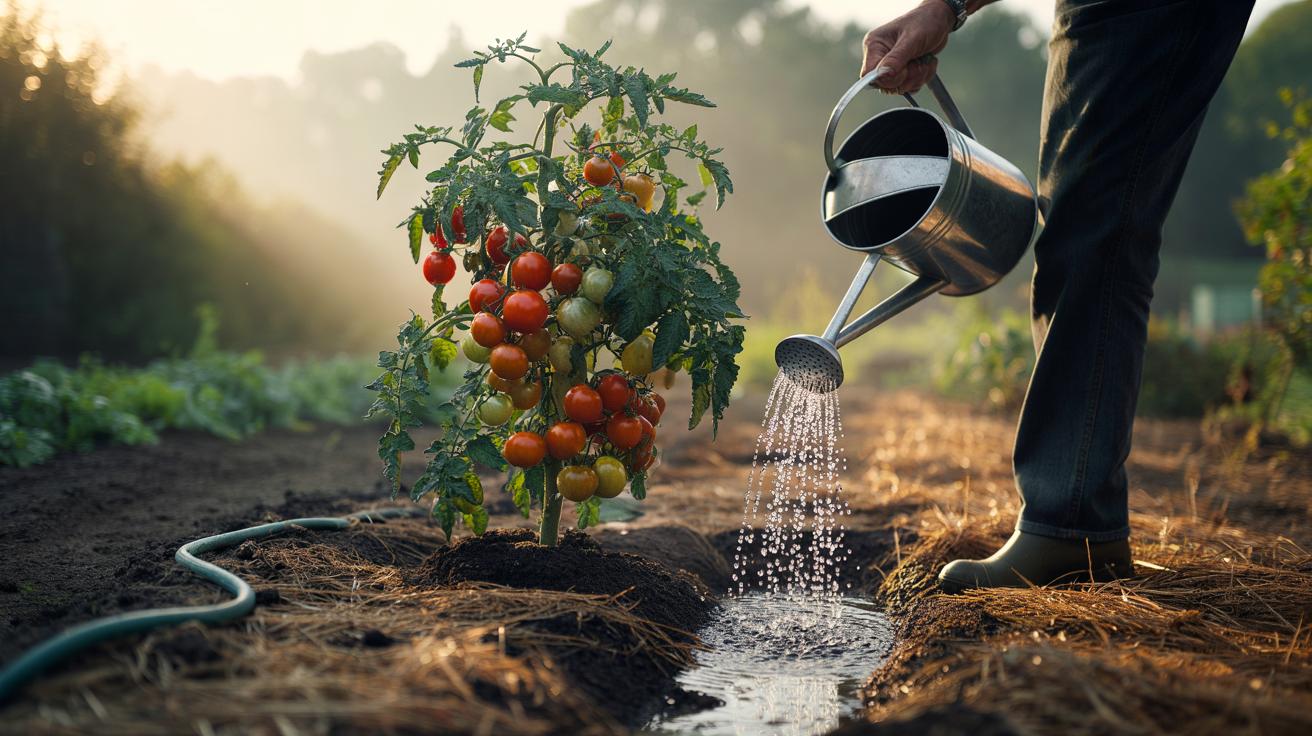
Tomatoes crave deep watering. Soak to 20–30 cm, then let the top few centimetres dry before watering again. Frequent sips only moisten the surface, training roots to loiter near heat and evaporation. Use drip irrigation or a slow rose to deliver water gradually so it penetrates rather than runs off. Morning is best. Leaves dry quickly as the sun rises, slashing disease risk. Evening soakings can linger on foliage, inviting blight and mildew. Mulch afterwards to lock moisture where fruits need it—around the roots, not on the leaves.
As plants shift from leafy growth to fruiting, the cadence matters. A rhythm of thorough, spaced-out drinks encourages strong roots and steadier sap flow, supporting sugar transport into ripening fruit. Match the size of the drink to the container or bed capacity. In a heatwave, maintain the depth but shorten the interval slightly, holding firm against the temptation to splash little and often. Sweetness follows steadiness. Use the guide below to align watering with growth stages.
| Stage | Aim | Watering Pattern | Soil Moisture Target | Notes |
|---|---|---|---|---|
| Seedling to Early Veg | Root establishment | Small but deep; 2–3 days apart | Evenly moist, not soggy | Prevent stress; avoid splashback |
| Flowering to Fruit Set | Stable growth | Deep; 2–4 days apart | Consistent moisture | Reduces blossom-end rot risk |
| Ripening (Blush onwards) | Concentrate sugars | Deep but less frequent | Slightly drier top layer | Start deficit carefully |
Use Regulated Deficit for Sweeter Fruit
Once clusters are set and the first fruits begin to blush, shift gears to regulated deficit irrigation. The principle: allow mild, controlled dryness so plants divert energy into Brix (sugars and soluble solids) rather than lush, watery foliage. Cut back irrigation volume by 25–40%, or extend the interval between deep waterings by a day. Monitor closely. If midday droop persists into the evening, you’ve gone too far. The goal is gentle tension in the soil profile, not a crisis.
Stage matters. Before and during early fruit set, maintain consistent moisture to prevent blossom-end rot and catty flavours. After colour break, let the top 5–7 cm dry between drinks while maintaining cool, firm moisture deeper down. Drip lines or leaky hoses shine here, feeding roots while the surface stays drier. Sweetness improves as the plant concentrates sap into fewer, better fruits. Prune lightly to improve airflow and sun exposure, but keep enough leaf cover to avoid sunscald, which can sour and toughen skins. For greenhouse vines, ventilate generously to control humidity while you dial back the hose.
Soil Health, Mulch, and Containers
Water strategy starts with the soil itself. Add 2–5 cm of compost at planting to boost water-holding capacity and nutrient balance, then cap the bed with 5–8 cm of mulch—straw, shredded leaves, or coarse compost. Mulch smooths out wet–dry swings, cuts evaporation, and stabilises temperature around the rhizosphere where sugars are allocated to fruit. Mulch is the cheapest sweetness upgrade you can buy. Keep it a palm’s width from the stem to prevent collar rot. In clay-heavy ground, mix in sharp grit or leaf mould to improve percolation so deep watering actually travels down.
Containers need sharper vigilance. Black pots heat up; moisture evaporates fast. Use large volumes—at least 20–30 litres—and choose peat-free mixes amended with bark fines for structure. Water until 10–15% drains from the base, then wait until the top 3–4 cm are dry before the next deep drink. Do not let pots sit in saucers of runoff. If using self-watering planters, keep the reservoir topped during vegetative growth, then lower it slightly at first blush to mimic deficit without desiccation. Every two weeks early on, give a thorough flush to prevent salt build-up that can harshen flavour; stop flushing once you start the ripening cutback. Pair all of this with targeted feeding, not overfeeding—excess nitrogen equals watery fruit.
Sweet tomatoes aren’t an accident; they’re a choreography of timing, depth, and deliberate restraint. Water deeply, then wait. Keep things steady through fruit set, then use measured deficit as colour arrives to concentrate sugars without tipping plants into stress. Build soils that hold moisture, mulch against the sky’s mood swings, and treat containers as the fast-drying microclimates they are. Flavour follows discipline, not indulgence. With your hose as the baton, your vines will sing. What adjustments will you try this week—longer intervals, morning-only soaks, or a carefully mulched bed to lock in that coveted, sun-warm sweetness?
Did you like it?4.6/5 (21)