In a nutshell
- 🧪 Why sinks smell: food residue and biofilm in the P-trap produce sulphur odours; baking soda neutralises acids while hot vinegar fizzes debris loose and boiling water flushes it away.
- 🧼 Step-by-step routine: 1 litre boiling water, 100 g baking soda, 250 ml hot white vinegar (plug 5–10 mins), then another flush; optional lemon or salt; repeat weekly for a lasting fresh sink.
- 🌿 Make it last: 30-second hot rinse after washing up, wipe grease before rinsing, bin oil, bedtime teaspoon of baking soda with hot water; disposal units benefit from vinegar ice cubes and citrus; monthly enzyme cleaner if needed.
- 🔧 Safety and plumbing: safe for PVC and stainless; avoid vinegar on natural stone; never mix with bleach or caustic openers; septic-safe; call a pro if odours persist, drainage is slow, or traps/vents may be faulty.
- ✅ Payoff: low cost, low fuss, high impact—this baking soda method keeps drains neutral-smelling all week and folds easily into a simple household routine.
Your kitchen sink should smell like nothing at all. When it doesn’t, that sour, drainy whiff can make a spotless kitchen feel grubby. The good news: a cupboard staple—baking soda—delivers a quiet, reliable fix that lasts days, not minutes. Paired with hot water and a dash of vinegar, it neutralises acids, loosens biofilm, and clears the grime that feeds bad odours. The method is quick, inexpensive, and gentle on modern plumbing. You don’t need harsh chemicals. You do need a routine. Below is the precise way to use bicarbonate of soda, why it works, and how to keep your sink smelling fresh all week—without masking agents or pricey gadgets.
Why Sinks Smell: The Science Behind Odours
A sink’s aroma usually isn’t the sink at all. It’s the microbial metropolis thriving just out of sight. Food residue collects on the inside of the waste pipe and in the P-trap (U-bend), forming a slimy biofilm. Anaerobic bacteria feast on that film and release volatile sulphur compounds—small, stinky molecules that our noses detect in trace amounts. Fats worsen it. They congeal in cool pipes, trap particles, and create a sticky scaffold for microbes.
Here’s where baking soda (sodium bicarbonate) comes in. It’s mildly alkaline, so it neutralises acidic odour molecules and disrupts the matrix that holds biofilm together. Add hot vinegar and you get a fizzy reaction that lifts debris, while boiling water flushes softened gunk away. It’s chemistry meeting plumbing. Because the reaction is mild, it’s safe for PVC and stainless steel when used sensibly. The trick is consistency. Do it once for a reset; do it weekly to stop smells returning. And if you cook often—especially with oil—light daily habits keep the microbes hungry and slow to regrow.
The Baking Soda Method: Step-by-Step Routine
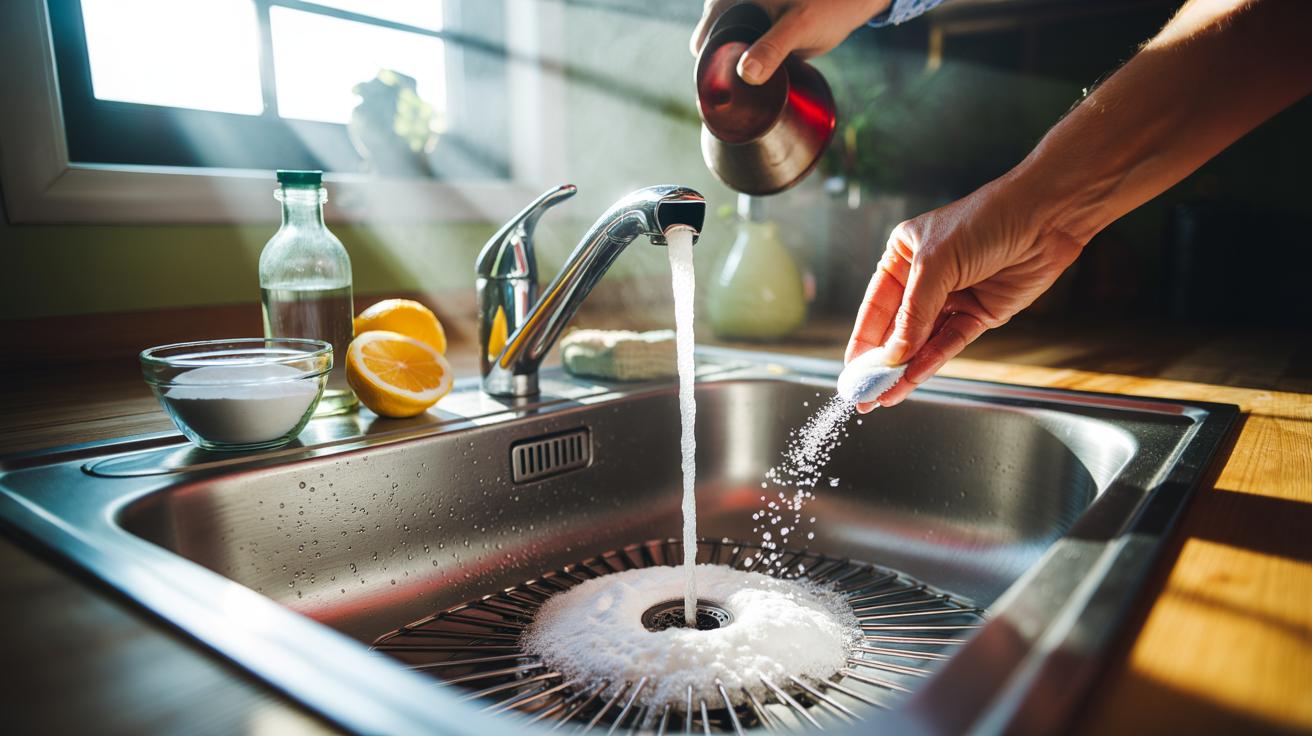
Block the smell at its source with this simple programme. First, clear visible scraps from the strainer. Then pour 1 litre of boiling water down the drain to soften grease. Tip in 100 g (about 1/2 cup) of baking soda. Follow with 250 ml (about 1 cup) of hot white vinegar. It will fizz; that’s normal. Fit the plug and let it work for 5–10 minutes, trapping the vapour so the reaction stays near the biofilm. Finish with another kettle of boiling water to flush.
For fragrance and extra degreasing, add 1 tablespoon of lemon juice or 4 drops of lemon essential oil to the soda before the vinegar. A teaspoon of coarse salt helps gently scour the basket strainer without scratching. Never combine this method with bleach or caustic drain openers—mixing chemicals can release dangerous gases. Used once a week, this routine keeps the P-trap clean enough that odours fail to build up.
| Step | Ingredient | Quantity | Wait Time | Purpose |
|---|---|---|---|---|
| 1 | Boiling water | 1 litre | — | Softens grease; warms pipe |
| 2 | Baking soda | 100 g (1/2 cup) | — | Neutralises odours; loosens biofilm |
| 3 | Hot white vinegar | 250 ml (1 cup) | 5–10 mins (plugged) | Fizzes to lift debris |
| 4 | Boiling water | 1 litre | — | Flushes loosened residue |
Make It Last All Week: Pro Tips and Variations
The weekly reset holds longer with small daily habits. Rinse the sink with very hot water for 30 seconds after washing up. Wipe pans with kitchen roll to remove grease before they meet the bowl. Bin oil; don’t pour it. Keep the strainer clear so scraps don’t lodge in the throat of the waste. A teaspoon of baking soda at bedtime, followed by a mug of hot water, is a fast midweek top-up that keeps odours at bay.
Have a waste disposal unit? Freeze vinegar into ice cubes, add a tablespoon of baking soda to the unit, then grind six cubes with a few citrus peels. The ice scours the impeller, the acid freshens, and the soda deodorises. For little-used guest basins, run the tap weekly to top up the water seal in the P-trap; dry traps let drain air into the room. If smells linger from the overflow channel, feed in a bottle brush dipped in hot soda solution to break hidden biofilm. Persistent whiffs after these steps? Try a monthly enzyme drain cleaner overnight—gentle, targeted, septic-safe.
Safety, Plumbing Considerations, and When to Call a Pro
Used properly, the baking soda method is kind to common materials. It suits PVC, stainless steel, and ceramic. Take care with natural stone worktops: wipe spills promptly, because vinegar can etch calcite-based surfaces. Silicone seals? No problem at household concentrations. Do not use this routine immediately before or after a caustic drain opener or bleach; always flush thoroughly and wait 24 hours. If you have a septic tank, these quantities are fine; you’re adding minimal acid and a benign salt.
Smell still returning within a day? That’s a red flag. You might have a partially blocked waste pipe, a misaligned trap, a cracked seal on the dishwasher standpipe, or a venting issue that’s pulling trap water away. Gurgling noises, slow drainage, or damp cupboards point to a deeper fault. At that stage, remove and clean the U-bend, or call a plumber for a mechanical clean. They can jet the line and check the trap and vent. If odour is noticeable from multiple fixtures, it’s likely beyond the sink and needs professional attention.
This is the quiet power of baking soda: low cost, low fuss, high impact. It neutralises, lifts, and clears, leaving your kitchen smelling like itself—fresh and unremarkable. Make the weekly reset your anchor, sprinkle micro-habits through the week, and you’ll rarely think about the drain again. Simple tools, consistent results. Which part of this routine will you try first, and what tweak might make it fit your kitchen habits perfectly?
Did you like it?4.5/5 (22)