In a nutshell
- 🧪 Why herbs work: Volatile oils (citronellal, eucalyptol, thymol, menthol) mask cues and deter insects—expect deterrence, not annihilation.
- 🌿 Core herbs: Mint, thyme, rosemary, basil, lemongrass; blend soft leaves for top notes and woody herbs for longevity; avoid neat essential oils on kids and pets.
- 🥣 DIY methods: Hot infusion (herbs + water + witch hazel/vodka, optional vanilla, tiny emulsifier) or express tincture (vodka steep, dilute 1:1) for longer-lasting bases.
- 🎯 Use it right: Spray cuffs, collars, ankles; reapply every 60–90 minutes; patch-test fabrics; keep away from eyes, flames, and open wounds.
- 🧊 Storage & fixes: Refrigerate infusions 10–14 days or keep alcohol at 20–25% for longer shelf life; shake if cloudy, discard if fizzy/off; never spray pets.
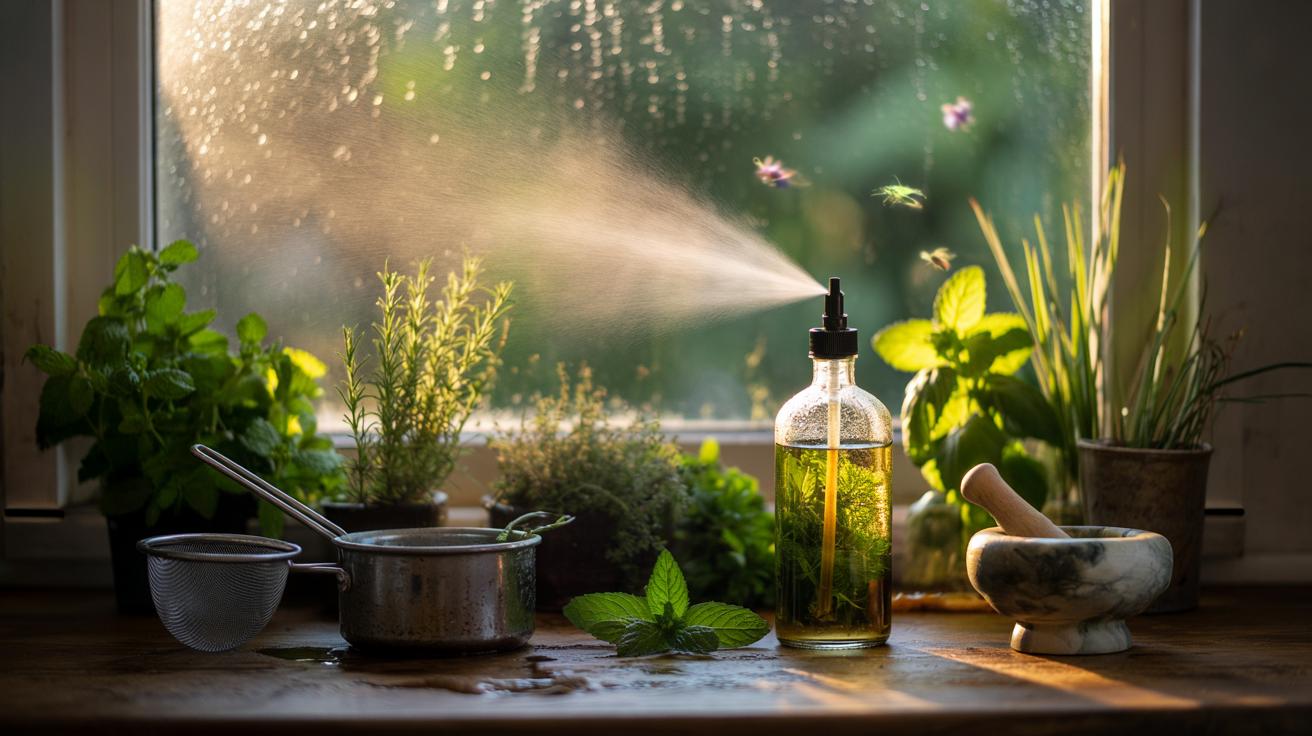
Summer kitchens smell of basil, mint, and rosemary; they can also smell like practical self-reliance. With a few everyday herbs you already cook with, you can craft a natural insect repellent that keeps midges, mosquitoes, and gnats at arm’s length. It’s simple. It’s frugal. It’s friendly to skin and surfaces when made sensibly. This guide explains the science behind herb-based repellents, shows you which leaves to reach for, and gives step-by-step methods that genuinely work in UK conditions. You don’t need lab gear or obscure ingredients. A saucepan, a sieve, and a clean spray bottle will do. Ready to turn your windowsill herbs into bite-fighting allies?
Why Kitchen Herbs Work Against Insects
Herbs deter insects because they’re packed with volatile oils—aromatic compounds plants use as their own defence. When you bruise or heat herbs like mint, thyme, or rosemary, they release molecules such as citronellal, eucalyptol (1,8-cineole), thymol, and menthol. These scents confuse an insect’s olfactory receptors, masking the chemical cues that guide them to warm skin and exhaled CO₂. Some constituents also create a mild irritant barrier on contact. It isn’t a kill switch, and that’s the point: you’re creating a fragrant shield, not a pesticide fog. Expect deterrence, not annihilation. The bonus? Your garden or window box regrows the raw materials, cutting plastic waste and repeated shop runs.
Effectiveness hinges on freshness and persistence. Light and oxygen degrade aromas quickly, which is why a home-made spray needs either frequent reapplication or a fixative. Pairing herbs—say, lemon balm with thyme—broadens the aromatic profile and seems to bother more species, from Scottish midges to houseflies near the bin. A light solvent like witch hazel or vodka helps disperse oils in water, making the mist more uniform on skin and fabrics. Patch-test first if you have sensitive skin, and keep concentrated essential oils to minimal, carefully measured amounts.
Core Herbs to Keep on Hand
Your cupboard and pots already hold effective options. Mint (peppermint or spearmint) delivers brisk menthol that gnats dislike. Thyme adds thymol, a robust aromatic with staying power. Rosemary brings eucalyptol; it’s hardy and grows year-round in many UK gardens. Basil contributes linalool, giving a clean, citrusy top note, while sage offers camphoraceous depth that lingers. If you cook Asian dishes, lemongrass or kaffir lime leaves are superb mosquito deterrents. Even bay leaves help in pantry sprays targeting moths. Blend soft leaves for bright top notes and woody herbs for endurance.
| Herb | Key Compounds | Best Against | Scent Note |
|---|---|---|---|
| Mint (Peppermint) | Menthol, menthone | Gnats, midges | Sharp, cooling |
| Thyme | Thymol, carvacrol | Mosquitoes, flies | Herbal, assertive |
| Rosemary | Eucalyptol, camphor | Mosquitoes, moths | Resinous, piney |
| Basil | Linalool, eugenol | Mosquitoes | Green, citrusy |
| Lemongrass | Citral, geraniol | Mosquitoes | Lemon-fresh |
Start with what you’ve got. For a balanced blend, think one part mint, one part rosemary, half a part thyme. If you prefer gentler profiles for children’s clothing (not on infants’ skin), go heavier on basil and lemon balm, lighter on thyme and sage. Steer clear of neat essential oils on children and pets. Cats, in particular, are sensitive to concentrated phenolic compounds from herbs like thyme and oregano.
Make a Potent yet Safe Spray
Method 1: Hot infusion. Lightly bruise 1 cup packed mixed herbs. Simmer in 500 ml water for 10–12 minutes, lid on. Cool, strain very fine. Add 100 ml witch hazel or 40% vodka to help disperse oils. Optional: 1 teaspoon vanilla extract (vanillin acts as a fixative). For better mixing, add 5–10 drops fragrance-free liquid soap as a gentle emulsifier. Bottle in a clean 750 ml spray. Label and date. Refrigerate and use within 10–14 days. If you wish, spike the batch with up to 10 total drops essential oil per 100 ml (e.g., lemon eucalyptus), but keep doses conservative.
Method 2: Express tincture. Pack a jar halfway with chopped herbs; cover with vodka (minimum 40% ABV). Steep 48–72 hours, shaking occasionally. Strain, then dilute 1:1 with cooled boiled water for a robust, longer-lasting base that resists spoilage. Sweeten strength with a splash of cider vinegar for flies near bins. Do not spray near eyes, flames, or open wounds. For fabrics, patch-test an inconspicuous spot. For skin, spray onto sleeves, ankles, and hat brims; avoid hands if you touch your face often. A reusable glass or aluminium bottle keeps the routine low-waste.
Using, Storing, and Troubleshooting
Apply generously before dusk walks, allotment sessions, or barbecues. Reapply every 60–90 minutes, sooner if you’re sweating or it’s breezy. Focus on cuffs, collars, socks, and the back of knees—places where midges hover. Indoors, a light mist around door frames and bin areas discourages flies. Herb sprays are not DEET—expect solid relief, not invisibility. Layering helps: a dab of unscented moisturiser first can slow evaporation. For campers, tuck a sprig of rosemary atop the stove or grill to scent the air while cooking; every little plume adds to the deterrent cloud.
If the spray feels tacky, you’ve used too much emulsifier; halve it next batch. If it’s weak, increase herb mass or extend simmer time by five minutes. Cloudy bottle? That’s normal with whole-plant infusions; just shake before use. Signs of spoilage include off smells or fizz—discard. For longer shelf life without parabens, keep alcohol at 20–25% of total volume and store cool and dark. Strain very finely to prevent nozzle clogs. Never apply to pets, and keep away from cats’ bedding. For travel, decant into 100 ml bottles, label clearly, and refresh the contents monthly in peak season.
Turning kitchen herbs into a practical bug-repelling spray is a quiet victory: low-cost, low-waste, and pleasantly fragrant. You choose the scent, you control the strength, and you know exactly what touches your skin. The secret is freshness, smart blending, and realistic reapplication. Start small, note what works on your local midges, then tweak the ratios until the results fit your routine. Will you try mint-and-thyme for evening walks, or lean citrus with lemongrass for garden parties—and how will you tune your blend as summer unfolds?
Did you like it?4.4/5 (29)