In a nutshell
- 🌧️ Rainwater chemistry: soft, low TDS, mildly acidic (≈ pH 5.6–6.5) versus hard tap; prevents salt build-up and leaf‑tip burn, avoids chlorine/chloramine, and supports the soil microbiome.
- 🧰 No‑fuss roof‑to‑pot method: downpipe diverter, first‑flush diverter, opaque food‑grade barrel on blocks with lid and mesh screens, low spigot, optional inline filter; label “Plants only.”
- ⚙️ Use and maintenance: let water reach room temperature, swirl to oxygenate; apply fertiliser at 25–50% strength with periodic plain‑rain flush; aim pH ~6.0 for peat‑free mixes; monitor with a TDS meter; rinse barrel quarterly; drain system before freezes.
- 🛡️ Hygiene and safety: clean gutters; screen all openings; avoid asbestos, flaking lead‑painted, or tar‑heavy roofs; after drought, let first rain fill the first‑flush before storage; block light to curb algae; stop mosquitoes with fine mesh.
- 🌿 Results and value: cleaner foliage, deeper greens, fewer salt deposits, happier sensitive species; low UK kit costs and simple upkeep make rainwater harvesting an easy upgrade for thriving houseplants.
On a wet British afternoon, every roof is a ready-made reservoir. Savvy indoor gardeners quietly catch that free resource and pour it into their pots. The result is striking: lusher leaves, fewer crispy tips, steadier growth. The secret isn’t mystical. It’s chemistry. Rainwater is naturally soft, low in dissolved salts, and gently acidic—qualities that mimic the forest floor where many houseplants evolved. In hard-water postcodes, that difference is dramatic. Switching your watering can from tap to sky is one of the simplest upgrades you can make. Below, a no-nonsense method, kit list, and troubleshooting guide to build a small, clean, and reliable rain cache for thriving plants year-round.
Why Rainwater Beats the Tap for Indoor Jungles
Plants don’t just drink; they absorb a chemical story. Tap supplies in much of the UK are rich in calcium carbonate and sometimes sodium from softeners. That raises pH, nudges nutrients out of availability, and leaves deposits in soil. Rainwater, by contrast, arrives with very low total dissolved solids (TDS) and a pH typically near 5.6–6.5 after a brief encounter with carbon dioxide. That matches the mildly acidic conditions of leaf litter where philodendrons, calatheas, orchids, and carnivorous plants flourish. Soft, low-mineral water lets fertiliser do its job, rather than competing with it, and it prevents the invisible crust that slowly locks roots away from air and moisture.
There’s also biology at stake. Many tap systems use chlorine or chloramine. Those disinfectants are excellent for public health but unhelpful for the soil microbiome that partners with roots to trade nutrients. Soft, disinfectant-free rain encourages microbial life, aids micronutrient uptake, and reduces leaf-tip burn—a common complaint in hard-water areas. You’ll notice cleaner foliage, less salt bloom on terracotta, and a deeper green in magnesium-hungry species. If you’ve been fighting brown edges on ferns and prayer plants, rainwater often ends the skirmish. The chemistry is simple. The results, as many growers report, are anything but subtle.
The No-Fuss Roof-To-Pot Method
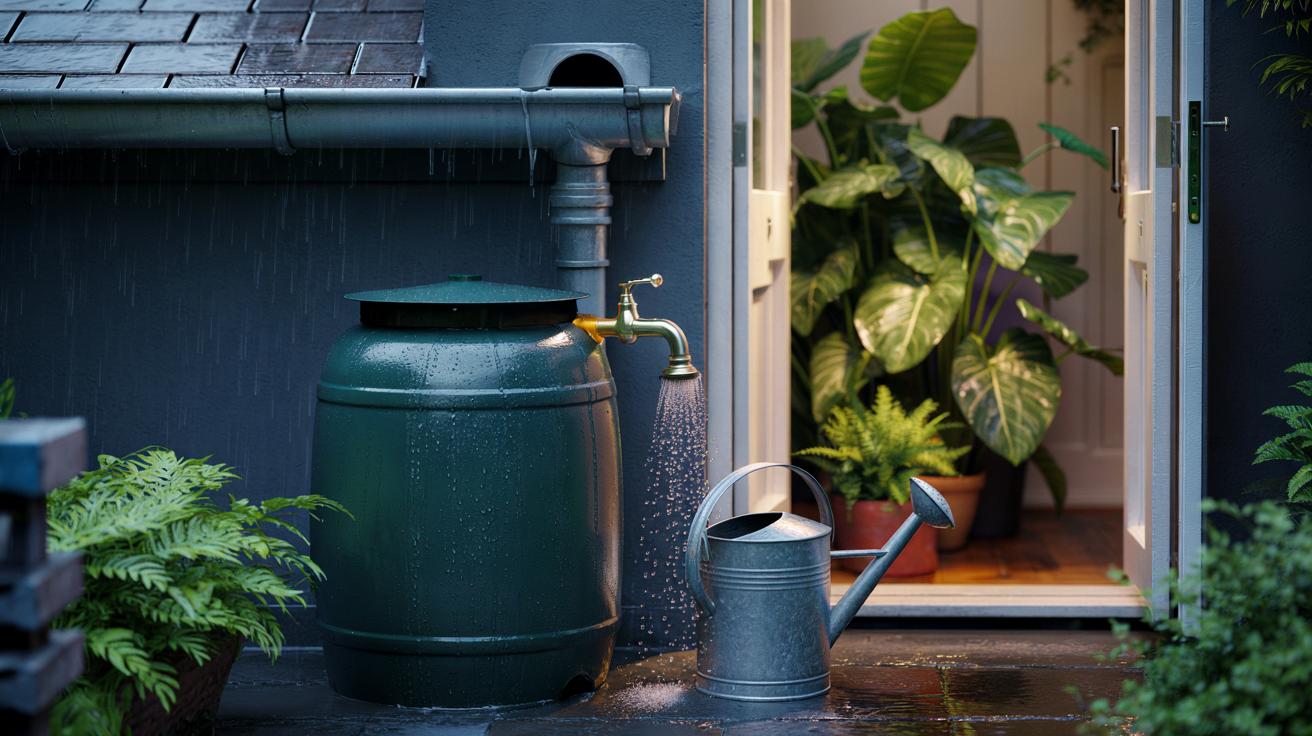
Set-up is quick if you treat it like plumbing with a hygiene plan. Start clean: sweep gutters and fit a leaf guard. Install a downpipe diverter at chest height so you can reach it. Ahead of your barrel, add a first-flush diverter; this small vertical tube captures that dirty initial runoff containing dust, bird droppings, and roof grit. Choose an opaque, food-grade barrel (100–200 L) with a tight lid to block light and insects. Raise it on blocks for gravity flow and fit a low spigot. Cover every opening with a mesh screen to keep out seeds and midges. If you’re urban, clip on a simple inline carbon/fibre filter before your watering can to polish taste and catch fines. Label the barrel “Plants only.”
| Component | Purpose | Typical Cost (UK) | Maintenance |
|---|---|---|---|
| Downpipe diverter | Channels rain from gutter to barrel | £15–£30 | Check seasonally |
| First-flush diverter | Discards dirty initial runoff | £20–£40 | Drain after heavy storms |
| Opaque barrel (100–200 L) | Storage, algae suppression | £35–£80 | Rinse quarterly |
| Lid + mesh screen | Keeps light, debris, insects out | £5–£15 | Clean monthly |
| Spigot/hose barb | Controlled dispensing | £6–£12 | Inspect for leaks |
| Inline polishing filter | Removes fines, improves clarity | £10–£25 | Replace 3–6 months |
| TDS meter (optional) | Checks mineral load | £8–£15 | Calibrate annually |
Use is as simple as timing. After a rain, draw what you need and let it reach room temperature; cold water shocks roots. Swirl your can to oxygenate. Never collect from asbestos cement, flaking lead-painted, or tar-heavy roofs. If birds frequent your ridge tiles, rely on the first-flush and keep that barrel lidded. In winter, drain the system before freezes; a collapsed diverter is a spring headache. Cleaning is mild: detach, rinse, and wipe biofilm with a soft brush; a splash of white vinegar helps, then rinse thoroughly. Avoid biocides—you’re watering soil life as much as leaves.
Using, Storing, and Troubleshooting Your Rain Cache
Rainwater is low in minerals, so pair it with a measured feed. Many growers use fertiliser at 25–50% label strength with every other watering, then run a plain rain flush monthly to clear salts. Watch pH if you’re mixing nutrients; aim near 6.0 for peat-free mixes. A cheap TDS pen tells you when urban dust has spiked a barrel; numbers under 50–70 ppm are typical after filtration. Always bring water indoors to warm slightly before soaking roots, and water thoroughly until you see some runoff—then empty saucers so roots don’t sit wet.
Storage is straightforward: keep barrels dark, sealed, and topped up to limit oxygen-starved corners. If water smells swampy, it’s gone anaerobic. Decant the clear top, scrub the barrel, and reset your first-flush; consider a small aquarium air stone for gentle aeration if you store for weeks. Green film means light ingress—fit a tighter lid or wrap the barrel. Mosquitoes? They need access; a fine mesh and closed lid stop them. Urban pollution after long dry spells is a real concern; let the first heavy shower rinse the roof and fill only after that first-flush chamber has captured debris. In freezing snaps, drain the system, coil the hose, and store the diverter indoors to prevent cracking.
Once set, the routine becomes pleasingly dull: capture, filter, warm, water, enjoy. Leaves feel cleaner, fertiliser goes further, and sensitive species finally stop sulking. Rainwater harvesting won’t turn a dim hallway into a rainforest, but it removes a major barrier to vitality in hard-water homes. When the sky does the softening, your potting mix stays balanced and breathable. Ready to give your plants a drink they were built to love—and if so, which part of this simple setup will you try first: the diverter, the barrel, or the finishing filter?
Did you like it?4.6/5 (29)