In a nutshell
- 🌱 Coffee grounds add organic matter, feed microbes, and improve soil structure; they’re typically near‑neutral pH with modest nutrients (~2% N, ~0.3% P/K)—think biology and texture first.
- ♻️ Best practice: hot compost at roughly 10–20% of the pile, apply a mulch as a 3–5 mm dusting then cap with coarse material, and limit containers to ~10% mix—never blanket the soil with pure grounds.
- 🪴 Targets: lifts heavy clays and steadies sandy beds; suits tomatoes, courgettes, pumpkins, and soft fruit; avoid seed trays and, for acid lovers, use ericaceous compost—slug deterrence evidence is mixed.
- 🪱 In-soil routes: trench-bury grounds 10–15 cm deep and feed wormeries lightly with shredded cardboard and eggshell; if it smells sour, pause coffee and add more “browns.”
- ☕ Supply and storage: collect free from cafés, dry or mix immediately with browns, use breathable storage, and keep separate from milk/syrups; paper filters can go straight to the compost.
The humble coffee grounds habit has moved from café bins to British borders, promising richer soil without a trip to the garden centre. Gardeners swear by it for good reason. Grounds add organic matter, feed microbes, and help earthworms thrive, turning tired plots into crumbly, workable beds. The trick is using them well. Too much in the wrong place can clog the surface like silty mud; just enough, mixed and layered, sparks life below ground. In allotments and small patios alike, this low-cost, circular method makes sense. Treat coffee waste as a soil conditioner, not a miracle fertiliser, and it will perform wonders.
What Coffee Grounds Actually Bring to Soil
Spent coffee grounds are largely cellulose and lignin, with a modest dose of nitrogen and trace minerals. After brewing, they’re not the acid bombs many assume; they tend towards near-neutral pH. That matters, because it opens the door to use with a wide range of plants, from fruit canes to brassicas. They also offer fine particle size and high surface area, creating prime real estate for microbial life that drives nutrient cycling. In short: organic matter first, fertiliser second. Think structure and biology before nutrients and you’ll use grounds effectively.
| Aspect | Typical Value | Why It Matters |
|---|---|---|
| Nitrogen (N) | ~2% by weight | Feeds microbes; modest fertiliser boost |
| Phosphorus (P) | ~0.3% | Supports roots and flowering |
| Potassium (K) | ~0.3% | Plant health and resilience |
| C:N Ratio | ~20:1 | Good for hot compost when mixed |
| pH (spent) | ~6.5–6.8 | Generally safe for most beds |
Beyond numbers, grounds improve soil structure. In heavy clays, they help create pores and better aggregation when blended with bulky organics. In sandy beds, they slow water loss by holding moisture. Microbes quickly colonise the particles, and as these communities bloom, nutrients previously locked in the soil become available. Earthworms join the party, dragging fragments downward, enhancing tilth naturally.
There is a catch. The fine texture can seal a surface if layered thickly, shedding rain like a tiled roof. Never spread coffee grounds as a blanket; always mix or cap with coarser material to keep water moving into the soil.
How To Use Grounds: Methods That Work
Hot compost is the gold standard. Blend grounds at roughly 10–20% of the pile with “browns” such as shredded cardboard, straw, or autumn leaves. The 20:1 C:N ratio helps the heap heat quickly, which speeds decomposition and kills weed seeds. Turn the pile weekly and sprinkle in a little finished compost to inoculate microbes. Clumpy, wet grounds? Break them apart as you add them so oxygen can flow, or the heap will slump and stall.
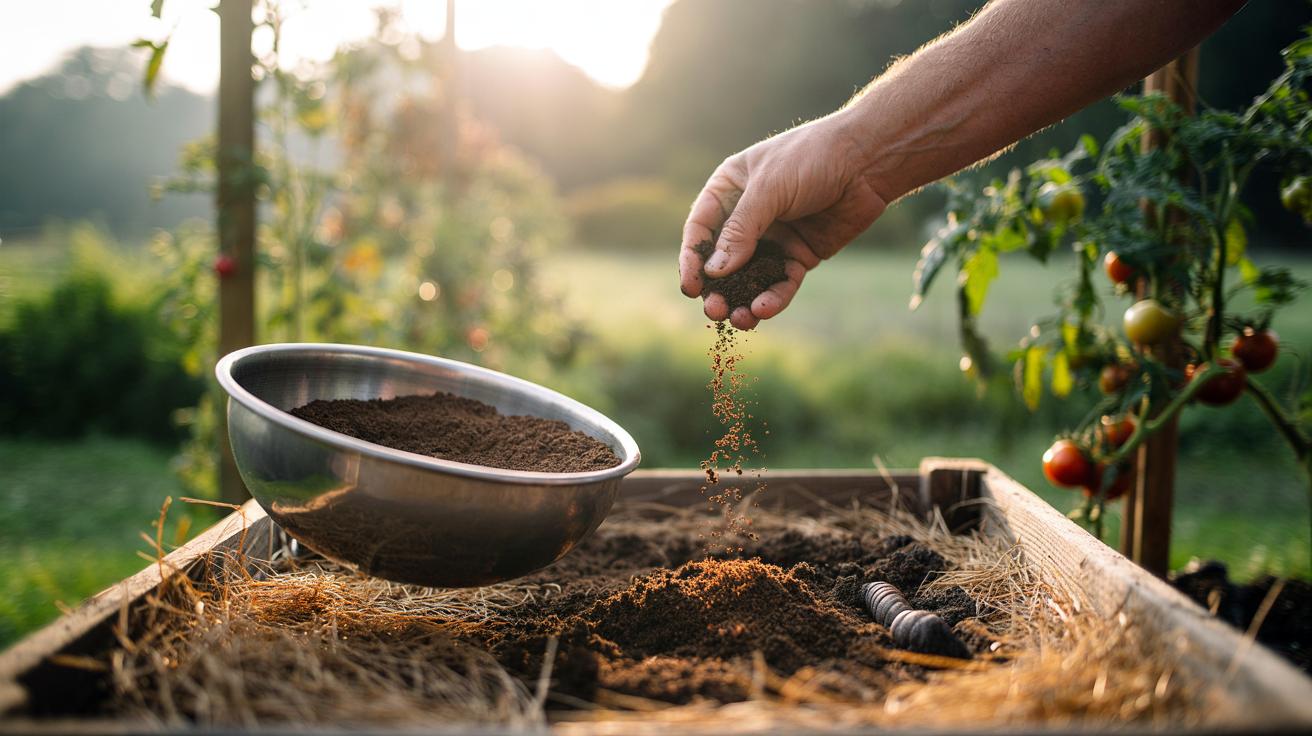
Mulching needs a light hand. Scatter a dusting—no more than 3–5 mm—around perennials and soft fruit, then cover that dusting with bark, leaf mould, or straw. The cap stops crusting, keeps moisture in, and encourages worms to graze safely. For containers, blend a small portion of grounds into potting mixes at up to 10% volume with composted bark; any more can compact fine media. Water well after application to settle particles where they belong.
Trench composting suits busy plots. Bury fresh grounds 10–15 cm deep along a row and alternate with kitchen peelings and dry leaves; plants on either side will tap into the nutrient plume as it breaks down. In wormeries, feed modest amounts of coffee scattered with shredded cardboard and eggshell. The grit helps worms grind food; the cardboard buffers acidity and absorbs moisture. If a sour smell develops, pause the coffee and add more browns until the bin smells earthy again.
Crops and Beds That Benefit Most
Start with the soil, not the crop. Clay-heavy beds gain air pockets and a looser crumb when grounds are mixed with coarse compost, making planting less of a wrestling match. In light, sandy soils, the same addition acts like a sponge, holding water and nutrients that otherwise leach away. Lawns enjoy a spring topdress of compost enriched with a small share of grounds, brushed in after scarifying to fuel microbial activity close to the root zone.
Among crops, vigorous feeders respond well. Courgettes, pumpkins, and tomatoes appreciate the slow nitrogen trickle when grounds pass through a compost heap first. Soft fruit—raspberries and strawberries—benefit from a thin mulched dusting capped with straw, which keeps berries clean and moisture steady. Avoid seed trays: the fine particles can compact, and caffeine traces may inhibit delicate germination. For young plants, use mature compost containing grounds rather than fresh material.
Let’s tackle the acid myth. Brewed grounds are usually near neutral, so they won’t meaningfully acidify soil for blueberries, rhododendrons, or camellias. Those ericaceous favourites still need proper ericaceous compost or sulphur-based amendments. Use coffee grounds to build structure and biology, not to change pH—your plants will tell the difference. Claims about slug deterrence remain mixed; at best, a light surface grit from dried grounds is marginal. Focus on healthy soil and mulches; resilience beats repellents in the long run.
Sourcing, Storing, and Community Tips
Britain’s high streets are rich in free resource. Ask cafés—independents and chains alike—if they save grounds; bring a lidded bucket and a smile. Many baristas are glad to help, and local groups often set up weekly collections. Home brewers can chip in too; paper filters go straight to the compost heap. This is circular gardening in action: waste from a morning ritual returns as life in the soil.
Fresh grounds can go musty fast. Spread them thinly on trays to dry for a day, or mix immediately with dry browns to balance moisture. Store in breathable sacks or a loosely covered bin; airtight tubs trap humidity and invite moulds. If you notice white fungal threads, don’t panic—most are harmless decomposers—but avoid dust clouds and wear gloves if handling large volumes. Keep bags out of the rain so nutrients don’t leach before you use them.
Quality varies. Flavoured syrups, spilled milk, or cleaning chemicals can taint café collections, so ask staff to set aside grounds separately. Decaf or regular makes no real difference in the soil. For allotment committees, a shared drop-off point keeps things tidy and fair. Add signage with simple rules: mix, don’t dump; cap mulches; rinse buckets. The cost is nil, the impact visible. In one season, the spade slides deeper, roots push wider, and watering cans come out less often.
Handled wisely, coffee grounds turn a disposable habit into living capital for the garden, strengthening soil life while trimming the waste stream. Aim for small, regular additions, favour the compost heap, and keep surfaces open to rain. It’s a method built on patience, texture, and biology rather than quick fixes. Your soil will darken, your beds will breathe, and the work under your feet will ease. What’s your plan for bringing this daily brew into your garden’s cycle, and which bed will you test first?
Did you like it?4.5/5 (28)