In a nutshell
- ♻️ Turn kitchen scraps into soil by composting plant-based trimmings—veg peels, fruit cores, coffee grounds, tea leaves, crushed eggshells—and adding shredded cardboard/paper; avoid meat, fish, dairy, and oils, chop scraps, and cover each addition.
- ⚖️ Hit the sweet spot: aim for C:N ≈ 30:1—roughly 2–3 parts browns to 1 part greens; keep moisture like a wrung‑out sponge and add coarse bulking for better aeration.
- 🗃️ Set up smart: choose a bin that fits—dalek, tumbler, slatted bay, wormery, or bokashi; place on soil with drainage and light shade, keep a sink caddy, and cap every drop-off with dry browns to suppress odours and flies.
- 🔧 Fix issues fast: ammonia whiff means excess greens; add browns and turn; swampy smell signals anaerobic conditions—loosen, add bulking, check drainage; deter pests with mesh, burial, and strict materials.
- 🌿 Expect timelines: 8–10 weeks hot or 6–12 months cool; finished compost is dark, friable, and earthy—cure, sieve, then use for mulches and mixes; small, steady routines cut waste and enrich soil.
Every peel, stem, and coffee puck you toss away is a missed chance to build fertile, living soil. Turning everyday kitchen scraps into garden compost is low-cost, practical, and surprisingly satisfying. It cuts the household waste bill, feeds pollinator-friendly planting, and locks carbon back into the ground. Start small. A caddy by the sink, a bin by the shed, and a handful of dry browns nearby. Small, steady habits create reliably rich compost. You do not need special gadgets or acres of space; just the right mix of materials, a touch of air, and a willingness to let microbes do the heavy lifting. Your soil—and your seedlings—will thank you.
What Counts as Kitchen Scraps
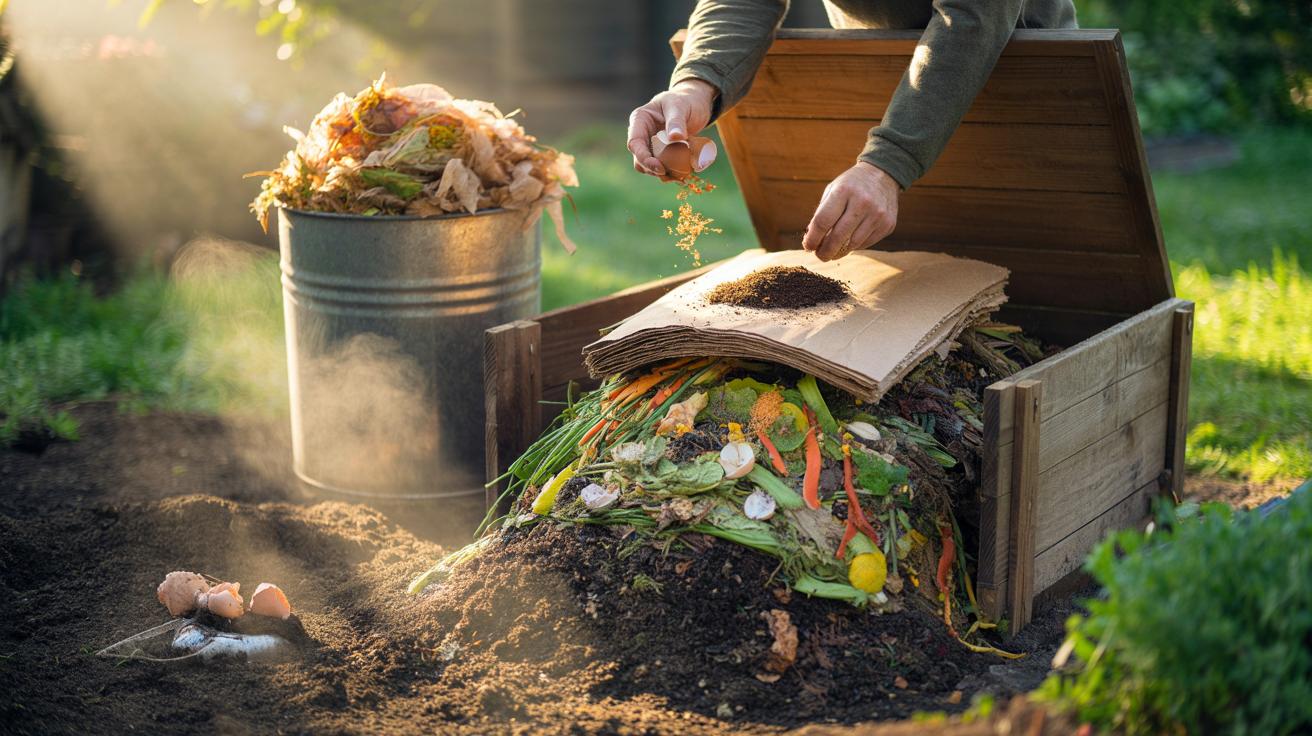
Your compost welcomes most plant-based trimmings. Think vegetable peelings, fruit cores, coffee grounds, loose tea leaves (plastic-free bags only), and crushed eggshells. Paper towels used for food, shredded cardboard, and plain paper serve as carbon-rich “browns.” Cooked grains or stale bread are acceptable in small amounts if buried. Avoid meat, fish, dairy, oils, and large bones—they attract pests and cause odours. Skip glossy packaging and heavily printed papers. Citrus and onion skins are fine in moderation; they simply decompose more slowly and can deter worms if overdone.
Chop scraps to increase surface area and speed breakdown. Drain very wet leftovers to prevent sogginess. Tear open tea bags to ensure the leaves meet microbes; check your tea bags are plastic-free. Coffee grounds are excellent but need balancing with dry browns. Eggshells add calcium yet decay slowly, so crush finely. Keep a mental tally: fresh, damp items are greens (nitrogen), while dry, papery materials are browns (carbon). That balance is the heart of successful composting.
| Item | Category | Notes |
|---|---|---|
| Vegetable peels and trimmings | Green | High nitrogen; chop for speed |
| Coffee grounds | Green | Mix with dry browns to prevent clumping |
| Tea leaves/bags | Green | Use plastic-free bags; tear open |
| Crushed eggshells | Mineral | Add calcium; slow to break down |
| Shredded cardboard/paper | Brown | Great bulking agent; avoid glossy print |
| Stale bread/pasta | Green | Small amounts; bury to deter pests |
| Citrus peel | Green | Thin layers; don’t overload |
Balancing Greens and Browns for Faster Decomposition
Composting is chemistry made visible. Microbes work best with a C:N ratio around 25–30:1, which translates neatly into two to three buckets of browns for every bucket of greens by volume. Greens—fresh scraps, coffee grounds—supply nitrogen for growth. Browns—shredded cardboard, dried leaves—provide carbon for energy and structure. Moisture matters just as much. Aim for a mix that feels like a wrung‑out sponge: not dripping, never dusty. Squeeze a handful; if water trickles, add browns, if it crumbles, add greens and a splash of water.
Build in gentle layers, then fluff together—don’t pack tightly. Add a few handfuls of coarse material (twigs, wood chips) to keep air pockets open for aeration. A scoop of finished compost or a clump of comfrey leaves acts as a microbial starter. Turn tumblers twice weekly for heat; fork static piles every fortnight. If it stinks, add browns and air. If it sits cold, chop materials smaller and add more greens. Either way, balance is your fastest route to dark, crumbly compost.
Setting Up Your Bin and Routine
Pick a system that fits your space and habits. A classic “dalek” bin on soil is cheap and reliable, a rotating tumbler speeds results, and a slatted bay suits keen gardeners with volume. Small patios thrive with a wormery; kitchens benefit from bokashi pre-composting before adding to a heap. Site outdoor bins on bare earth for drainage and worm access, in light shade to avoid drying. Fit a rodent‑proof base or mesh where needed, and secure the lid. Keep a stash of dry browns beside the bin so every delivery of scraps gets an immediate cover layer.
Make the routine effortless. Keep a lidded caddy by the sink; line with paper, not plastic. Empty daily, then sprinkle a layer of browns to cap odours and flies. Chop chunky items, drain soups and sauces, and bury any bread or rice. Through winter, insulate with cardboard and leaves to retain heat; in summer, water lightly if the heap dries. Keep it tidy: wipe rims, close lids, and sweep spills. Consistency beats intensity—five minutes often is better than a monthly marathon.
Troubleshooting Odours, Pests, and Slow Piles
Fuggy, sharp smells signal imbalance. An ammonia whiff means excess greens; fold in shredded cardboard and turn to vent. A rotten, swampy pong indicates anaerobic conditions; loosen the heap, add coarse bulking material, and check drainage. If the pile is dry and inert, mist with water and add a flush of fresh greens. Smell is a diagnostic tool: sweet, earthy notes mean you’re close to right.
Pesky visitors? Bury food scraps under browns, exclude meat/dairy/oil, and fit fine mesh at the base and vents. In fruit‑fly season, cap every addition with a full hand of browns. Slow progress in cold months is normal—insulate with leaves, reduce particle size, and turn less often to conserve heat. Expect timelines: six to twelve months for a cool heap, eight to ten weeks for a well‑managed hot batch. Cure finished compost for a few weeks, then sieve. Finished compost smells like woodland after rain—dark, friable, and ready for mulch or potting blends.
Turning scraps into soil is a quietly radical act. You cut waste collection, feed your beds, and build resilience in a warming climate. The method is forgiving once you master a few rhythms: balance greens and browns, keep things airy, and protect the heap from pests and excess wet. Start with what you have, adjust as you learn, and let microbes lead. Will you set up a caddy tonight, stash a bundle of cardboard for cover, and make this the week you start transforming peelings into power—what will be the first kitchen scrap you rescue from the bin, and how will you design your composting routine?
Did you like it?4.7/5 (26)