In a nutshell
- 🦠 Explains why drains smell: biofilm in the P-trap, fats, food residues, and limescale create sulphurous odours; the smell is a symptom, not a failing.
- ⚡ The one-minute trick: add 2 tbsp bicarbonate of soda, 2 tsp lemon juice or vinegar (+ 6–8 drops lemon oil), then 500 ml boiling water; finish with a short cold run to re-prime the trap.
- 🔬 How it works: mild alkali neutralises odours; acid fizz agitates deposits; heat liquefies grease and flushes bacteria; optional washing-up liquid boosts emulsification; never mix with bleach and pour slowly for uPVC.
- 🗓️ When and what to avoid: use after pungent cooking or every 3–4 days; target the overflow if smells persist; avoid coffee grounds/eggshells and harsh caustics; always restore the P-trap water seal.
- 🌿 Habit and outcomes: keep pre-measured supplies by the sink for speed; sustainable, septic-friendly routine that leaves a fresh citrus scent lasting for days.
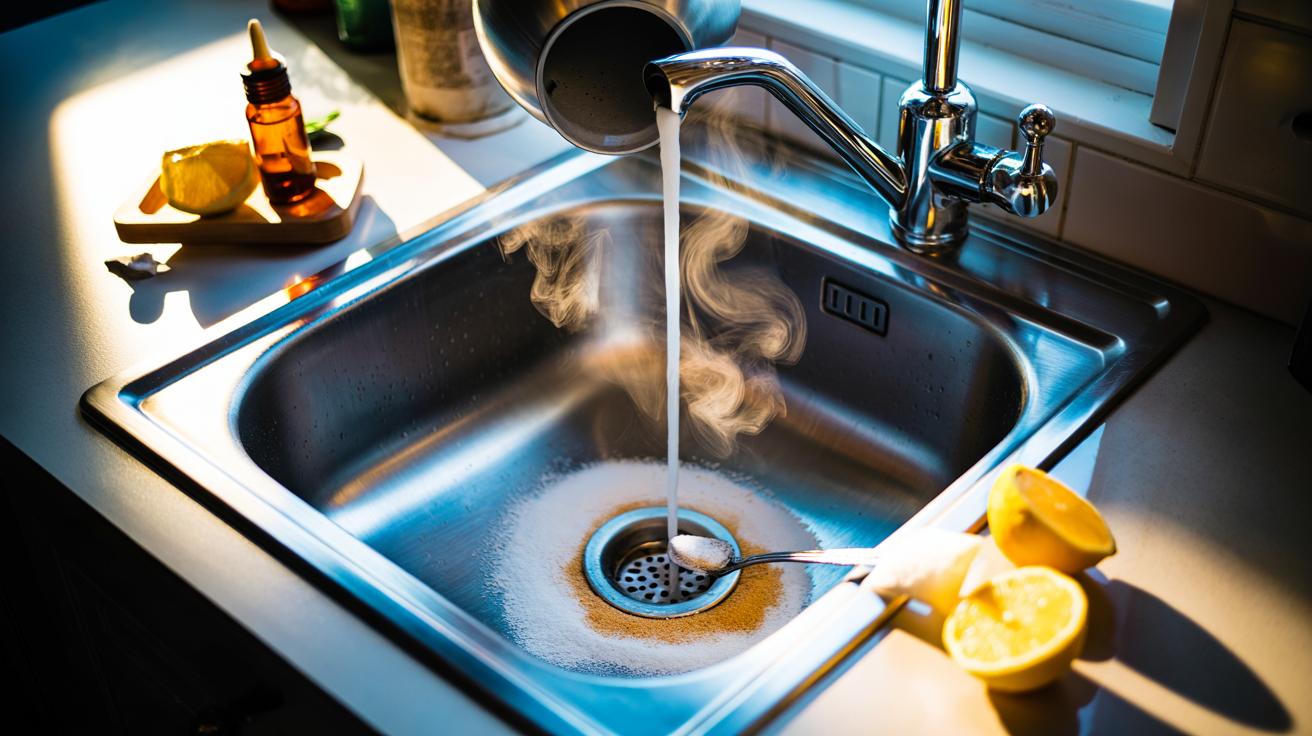
Your kitchen sink announces more about your home than you might think. A faint whiff of drain pong can undo even the tidiest worktop. The fix doesn’t require harsh chemicals or a plumber’s invoice. It needs a kettle, a spoon, and a citrus note. Here’s the one-minute trick I’ve tested in countless British kitchens, from rental flats to rural cottages: a quick, safe flush that melts grease, knocks back bacteria, and leaves a bright scent that lasts. It’s fast. It’s frugal. And it works with what you already own. In under 60 seconds of effort, you’ll reset the odour profile of your drain for days.
Why Kitchen Sinks Smell in the First Place
Let’s clear the air. Drains don’t stink because you’re slovenly; they stink because kitchen pipes are perfect habitats for microbes. Food residues stick to the inner walls and the U‑bend—what plumbers call the P-trap—where a thin water seal meets a cosy, low‑oxygen nook. There, a microbial film—biofilm—thrives on starches, fats, and proteins, producing sulphurous compounds that smell like rotten eggs or damp dishcloth. Hot pans, chilly rinses, then a bit of milk down the plughole? A daily buffet. Coffee grounds don’t “scrub” pipes either; they cling, then rot. Small habits build big odours.
What makes it worse is temperature and time. Warm water softens grease but, as it cools, that grease resolidifies further along the pipe, giving bacteria fresh scaffolding to colonise. Tiny bits of onion, mince, or dairy become a long‑lasting snack. Add in limescale roughness in hard‑water areas and the pipe’s inner surface turns from a slide to Velcro. The smell is a symptom, not a moral failing. The trick is to break up film, shift fats while hot, and refresh the water seal so gases can’t drift back into your kitchen.
The One-Minute Trick: Bicarbonate, Citrus, and Kettle Heat
Here’s the routine. Spoon 2 tablespoons of bicarbonate of soda straight down the plughole. Add a quick acid-and-scent boost: either 2 teaspoons of lemon juice (or white vinegar) plus 6–8 drops lemon essential oil, or simply a generous squeeze of fresh lemon. The fizz starts loosening film at once. Now pour in about 500 ml of freshly boiled water from the kettle, steadily, not in a single whoosh. Let it sit for 30 seconds, then run the cold tap for five seconds to re‑prime the trap. Done. It’s 60 seconds of action that keeps odours at bay for days.
The amounts aren’t precious, but proportions help. Too much acid wastes the bicarbonate; too little heat leaves grease clinging. This gentle balance deodorises, dislodges, and refreshes without harshness. If your sink has a food catcher, lift it first and flick debris into the bin. For sinks with overflows, aim some of the mix into the overflow slot too; a surprising number of smells lurk there.
| Item | Amount | Purpose | Time |
|---|---|---|---|
| Bicarbonate of soda | 2 tbsp | Neutralises odours, soft scouring of biofilm | 10 seconds |
| Lemon juice or vinegar | 2 tsp | Creates fizz, dissolves mineral film | 10 seconds |
| Boiling water | 500 ml | Melts grease, flushes loosened debris | 20 seconds pour |
| Lemon essential oil | 6–8 drops | Fresh scent, light antimicrobial lift | 5 seconds |
Tip for busy households: keep a small jar of pre‑measured bicarbonate and a tiny dropper bottle of oil under the sink. Speed is habit. Habit is hygiene.
What Happens Chemically and Mechanically
This is not magic. It’s chemistry and heat doing ordinary, effective work. Bicarbonate of soda is mildly alkaline; it neutralises acidic odours and adds a soft grit that helps break biofilm cohesion without scratching stainless steel. A splash of acid—lemon or vinegar—reacts with bicarbonate to create carbon dioxide bubbles. Those bubbles agitate the film, lifting it from the pipe wall. Then comes the clincher: boiling water liquefies fats and shortens the life of odour‑causing bacteria by washing them into faster‑flowing sections of the waste line.
Add a drop of washing‑up liquid if you’ve been cooking fatty food; its surfactants emulsify grease so the hot flush carries it away. Essential oils? They don’t just smell nice; their volatile compounds provide a lingering top note. Safety matters. Stainless and enamel sinks are fine with boiling water. With uPVC pipes, pour slowly to avoid heat shock at joints. Never mix this method with bleach; bleach plus acids release dangerous gases. If you used bleach earlier, flush with plenty of plain water first and wait.
When to Use, What to Avoid, and How to Boost Freshness
Use this one-minute trick after smelly meals (fish, onions, curry night) or as a routine every three to four days. Heavy week in the kitchen? Do it nightly for a spell. If smells persist, the culprit may be the overflow channel, a dry P‑trap (rare but common in little‑used utility sinks), or a partial blockage further along the line. In that case, a deeper clean—removing the trap or using an enzyme drain cleaner overnight—may be wise.
Avoid coffee grounds and eggshells; they don’t scour, they lodge. Skip harsh caustic crystals unless a professional recommends them; they can warp plastics and damage seals. House with a septic tank? This method is gentle on bacterial balance compared with bleaches or strong alkalis. One clever boost: fit a mesh strainer to catch scraps, and scrape plates into the food caddy before rinsing. Another: after the hot flush, always run five seconds of cold water to restore the P-trap water seal—your invisible odour gate.
Keep it sustainable. Stash a jar of bicarbonate of soda beside the kettle; stash lemon rinds in the freezer and squeeze one when needed. Descale the kettle periodically so you’re delivering clean heat, not limescale flakes. And if your tap has a faint drain smell on first run, clean the aerator and give the overflow slit a targeted fizz. Small, regular acts beat the occasional blitz.
The best home habits are quick, repeatable, and calm the senses as much as they clean the space. This tiny ritual does exactly that, combining chemistry, heat, and a citrus whisper to turn the plughole from liability to afterthought. Your kitchen will smell like it’s been aired, even on a rainy Tuesday, and the effect lingers longer than you’d think. Ready to set a kettle, keep a spoon by the sink, and try the one-minute flush tonight—then report back on how many days your drain stays fresh?
Did you like it?4.5/5 (28)