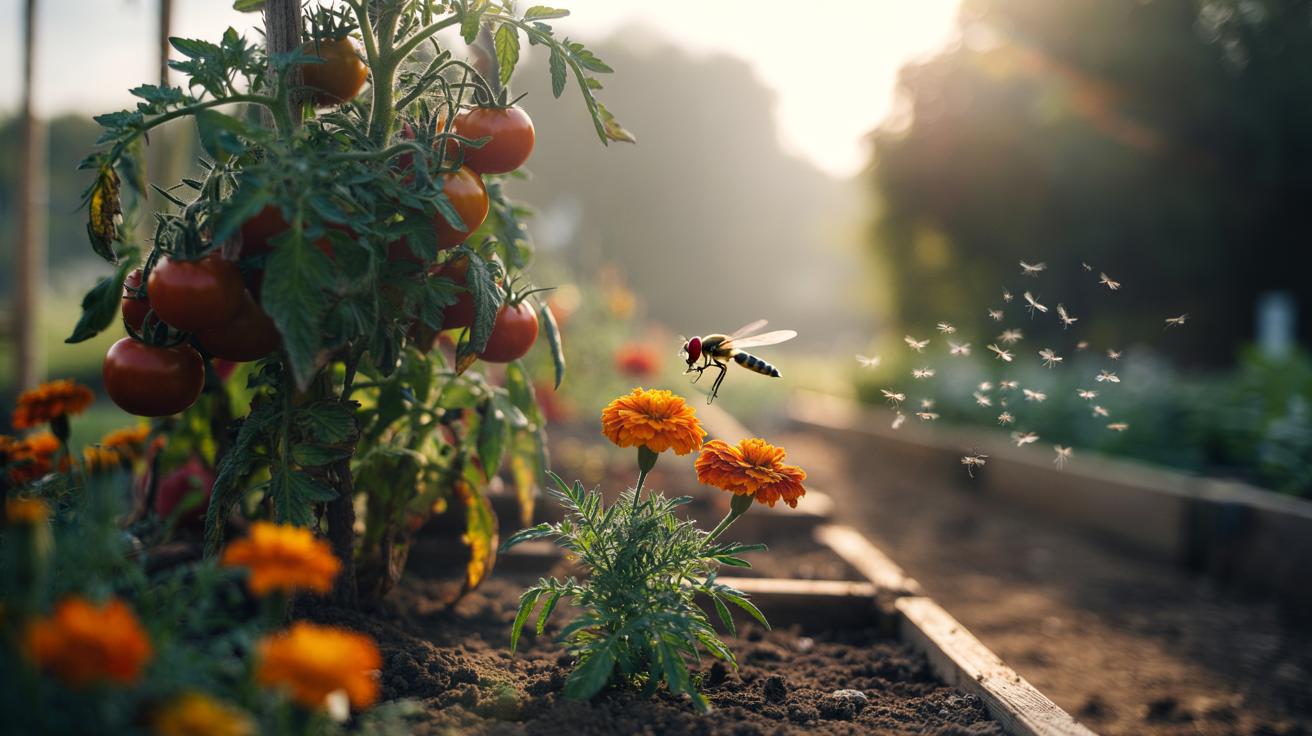
In a nutshell
- 🌼 Planting marigolds beside tomatoes masks host signals; their aromatic VOCs (limonene, linalool, ocimene, tagetone) confuse aphids and whiteflies.
- 🧪 Below ground, root-released thiophenes (notably alpha-terthienyl) suppress root‑knot nematodes, delivering a gentle, natural biofumigation.
- 🐞 Nectar-rich blooms recruit beneficial insects—hoverflies, lacewings, and parasitic wasps—keeping sap-sucker outbreaks in check.
- 🗺️ Practical UK tips: choose French marigold (T. patula) or signet marigold (T. tenuifolia), space 20–30 cm, interplant every 40–50 cm, and deadhead for continuous scent.
- ⚖️ Part of integrated pest management: maintain airflow, manage slugs, rotate crops, and aim for reduction of pests rather than eradication.
Walk down any UK allotment in June and you’ll spot a classic pairing: marigolds crowding the feet of ripening tomatoes. It looks cheerful, yes, but it’s more than colour coordination. Gardeners lean on this duo because marigolds quietly change the biology and the chemistry of the bed, tipping the balance against pests. Planting marigolds near tomatoes can reduce aphids, whiteflies, and soil-dwelling nematodes without resorting to sprays. Here’s how it works: fragrant blooms that scramble insect behaviour, roots that sabotage microscopic worms, and nectar that recruits allies. The result is practical, low-cost, and refreshingly natural. Let’s dig into the science and the simple steps that make it work.
The Chemistry Behind Marigolds’ Pest-Repelling Reputation
Marigolds release a cocktail of volatile organic compounds (VOCs) that many pests find confusing or outright repellent. In Tagetes species—especially French marigold (Tagetes patula)—researchers have identified limonene, linalool, ocimene, and the marigold-specialist molecule tagetone. These scents mask the tomato’s own “find me” signals, making it harder for whiteflies and aphids to zero in. Another family of molecules, the sulphur-rich thiophenes (most notably alpha-terthienyl), can be toxic to small insects and nematodes, especially under bright light. The beauty is stealth: marigolds don’t kill everything outright; they scramble cues and nudge pest populations downward. That subtlety supports a livelier garden ecology rather than scorched-earth control.
Think of VOCs as airborne messages. Tomatoes broadcast, “Food here.” Marigolds broadcast, “Nothing to see.” In mixed plantings, the message gets garbled. Pests hesitate, feed less, or move on. Timing counts: keep flowers coming with regular deadheading so the aroma remains strong through the season. Choose varieties known for pungent foliage; French marigolds and signet marigolds (Tagetes tenuifolia) excel at scent. A small border helps, a generous ring helps more. For balcony growers, tucking a pot of marigolds beside a tomato container can deliver the same chemical smokescreen in miniature.
Soil Allies: How Marigold Roots Disarm Nematodes
Not all threats come with wings. Root-knot nematodes (Meloidogyne spp.) puncture tomato roots, causing galls, stunting, and yield loss. Here, marigolds work underground. Their roots release thiophenes that disrupt nematode development and reduce populations in the surrounding soil. It’s a living biofumigation, gentle by garden standards yet meaningful over a season. The effect is most consistent with Tagetes patula, though other Tagetes contribute. Importantly, it’s species-specific: some nematodes are more sensitive than others, and suppression builds as roots occupy the soil.
For best results, interplant marigolds throughout the tomato bed rather than at the ends, or use them as a prior “cleaning” crop for six to eight weeks before tomatoes. In heavy-problem plots, a full marigold block the previous summer can make a noticeable dent by spring. Chop and incorporate the tops at season’s end; the residues add a final pulse of bioactive compounds. Don’t expect miracles overnight. Think reduction, not eradication. Pair with crop rotation and organic matter to strengthen roots and microbial allies.
Note the limits. Waterlogged soils and persistent infestations may still warrant resistant tomato rootstocks. But as part of integrated pest management, marigolds pull real weight with little fuss and zero synthetic inputs.
Beneficial Insects and Behavioural ‘Camouflage’
Companion planting isn’t only about repelling pests; it’s about recruiting friends. Low, nectar-rich marigold blooms feed hoverflies, lacewings, and tiny parasitic wasps whose larvae hunt aphids, whiteflies, and caterpillars among the tomato vines. The flowers act like service stations along a motorway. Keep fuel flowing—regular deadheading and steady watering—so beneficials remain on patrol. Paired with the scent “smokescreen,” this living militia tips the balance. When predators arrive early, outbreaks never quite take off. Gardeners notice it as calm: fewer curling leaves, cleaner trusses, and less sticky honeydew underfoot.
Behaviour matters too. Some pests cue on silhouette, leaf volatiles, and even background contrast. A band of marigolds introduces visual and chemical clutter, a kind of behavioural camouflage. Whiteflies, for instance, loiter longer before settling, and that delay buys time for predators to strike. There are caveats: young marigold seedlings can attract slugs, so add barriers or traps in damp spells. And densely packed borders must not shade or crowd tomatoes; air flow prevents blight-friendly humidity. Done well, the arrangement becomes a small ecosystem with redundancy, not a single trick.
Practical Layout: Distances, Varieties, and Seasonal Care for UK Gardens
Start simple. Set marigolds 20–30 cm apart as an edging or weave one plant every 40–50 cm within tomato rows. Keep tomatoes at 45–60 cm spacing for air flow. Choose French marigold (T. patula) for compact edging, signet marigold (T. tenuifolia) for masses of fine flowers, or African marigold (T. erecta) where height is needed. Sow indoors in late February to March; harden off and plant out after frost risk passes. Deadhead fortnightly. Water at the base, not the bloom. Healthy, continuously flowering marigolds deliver the strongest pest-mitigating effect. In containers, one marigold per 20–25 cm pot alongside a tomato is a tidy, effective pairing.
Use the guide below to match goals to methods. It’s quick reference, not strict rule. Adjust spacing for vigorous varieties and site conditions. Feed tomatoes as usual; marigolds are undemanding and tolerate lean soil, which keeps them compact and busy with blooms.
| Target | Mechanism | Best Tagetes Type | Placement Tip |
|---|---|---|---|
| Aphids, whiteflies | VOCs confuse and deter; attract predators | T. patula, T. tenuifolia | Edge the bed; interplant every 40–50 cm |
| Root-knot nematodes | Root thiophenes suppress populations | T. patula | Intercrop or use as prior cover for 6–8 weeks |
| Tomato hornworm/caterpillars | Predator support via nectar | T. tenuifolia | Continuous bloom; deadhead regularly |
Marigolds won’t replace good hygiene or weather-savvy timing, but they sharpen your odds. Their fragrances cloud pest decisions; their roots hobble hidden enemies; their flowers feed the cavalry that keeps sap-suckers in check. It’s tidy, affordable, and hands-on—the essence of allotment craft. Plant a ring of marigolds now and you build quiet resilience into your tomato patch for months. As you plan your beds this season, where might a band of gold do the most good—and which Tagetes would you trial first to put this natural defence to work?
Did you like it?4.5/5 (25)