In a nutshell
- 🌿 Use cold water shock to rehydrate wilted herbs in minutes: trim stems, submerge briefly in cold water, then dry.
- 🧪 Science snapshot: restore turgor pressure via osmosis; cold slows respiration and firms membranes; avoid chilling injury in basil.
- 🕒❄️ Target temps and times: 4–7°C for parsley, coriander, mint (5–15 min); basil 10–12°C for 3–5 min, never icy.
- 🔧 If limp persists, re-snip stems, refresh water, brief ice bath for hardy herbs; don’t oversoak and never add salt to the bath.
- 🌼 Storage that sticks: refrigerator “bouquet method” for stemmed herbs (room temperature for basil), or a towel-lined box to keep leaves crisp.
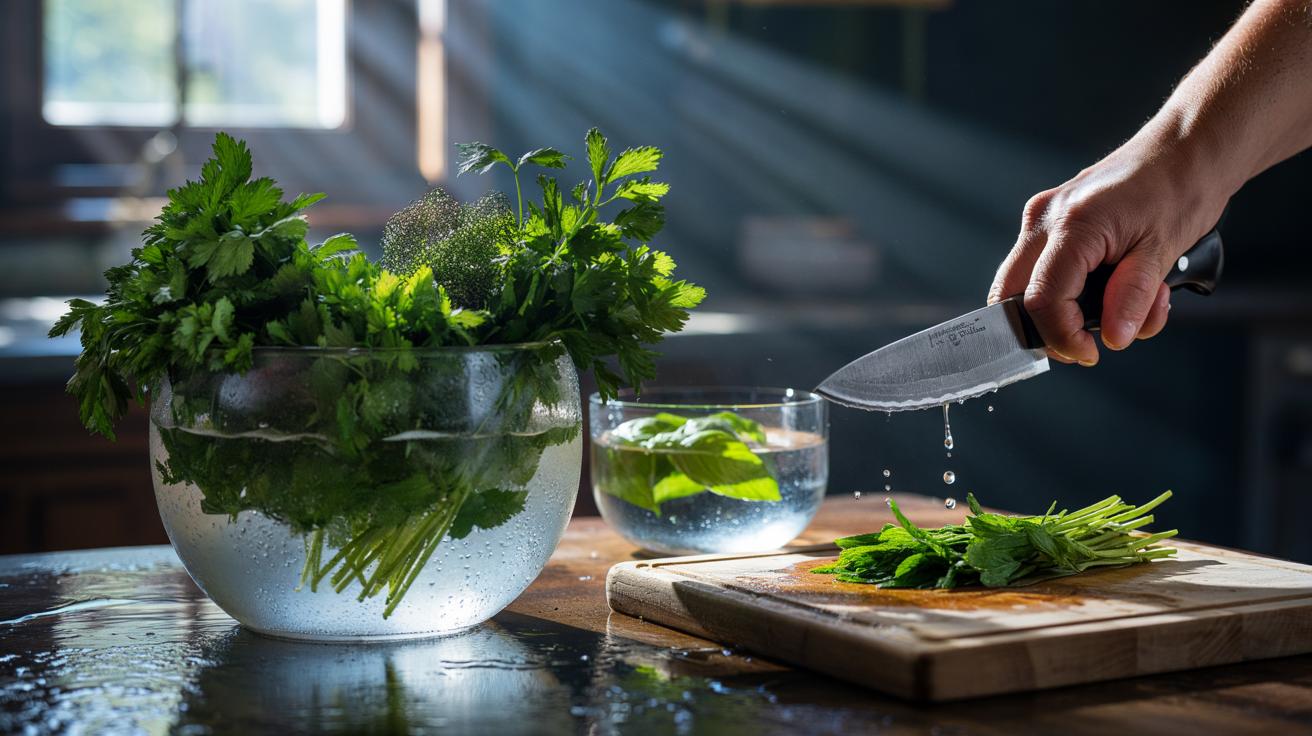
Every cook knows the heartbreak of limp parsley or drooping basil just when a dish needs a fresh lift. The good news: you can often bring those herbs back from the brink in minutes with a simple kitchen trick known as cold water shock. It’s fast. It’s forgiving. And it relies on plant physiology, not magic. Think of it as first aid for fragile greens. With the right temperature, a quick trim, and a short soak, flaccid leaves firm up, colours brighten, and fragrance returns. Here’s how to do it properly, why it works, and how to keep your revived herbs perky for tonight’s dinner—and tomorrow’s lunch.
Why Herbs Wilt and How Water Revives Them
Wilted herbs aren’t “dead”; they’re dehydrated. Leaves collapse when they lose internal water pressure, the plant-world equivalent of a deflated tyre. The science is elegant. Cells maintain firmness through turgor pressure, a steady push of water against cell walls. When heat, time, or dry air steals moisture, that pressure drops and stems droop. A cold soak reverses the gradient. Water moves back into cells via osmosis, refilling the plant’s tiny plumbing—its xylem—and re‑inflating tissues. Rehydration, not trickery, is what restores crispness.
Temperature matters. Cold water slows enzymatic activity and reduces respiration, buying time for uptake without further wilting. It also firms cell membranes, helping them hold water once refilled. But there’s a catch: tender, warm‑weather herbs like basil dislike a deep chill; they can suffer chilling injury below around 10°C, turning blackish at the edges. Hardy herbs—parsley, coriander, mint—tolerate a colder bath. The art is matching soak temperature and time to the herb in hand. Trimmed stems, fresh water, and a gentle dry-off complete the revival.
Step-by-Step: The Cold Water Shock Method
Set up two things: a bowl of cold water and a sharp knife. For most herbs, aim for 4–7°C water (fridge-cold). For basil, cooler rather than icy—around 10–12°C. Act quickly; the sooner you start, the better the bounce-back. First, remove any slimy or yellowing bits to avoid off flavours. Next, snip 5–10 mm from the stems at an angle. This opens clean capillaries for faster water uptake. Fully submerge the herbs. For feathery leaves like dill, press gently to release trapped air bubbles. Leave undisturbed.
Time it. Most bunches rebound in 5–15 minutes. You’ll see stems stiffen and leaf edges perk. Lift out, shake off excess water, then roll in a clean tea towel or spin very briefly. Want extra snap? Stand stems like flowers in a jug with cold water for another 10 minutes. Do not oversoak. Saturated leaves can turn waterlogged and dull in flavour. For basil specifically, skip ice. Keep it cool, not frigid, and revive in a shaded spot on the counter rather than the fridge.
| Herb | Water Temp | Shock Time | Notes |
|---|---|---|---|
| Parsley | 4–7°C | 10–15 min | Trim stems; full submersion best |
| Coriander (Cilantro) | 4–7°C | 8–12 min | Remove slimy leaves first |
| Mint | 4–7°C | 10–15 min | Swirl gently to dislodge bubbles |
| Dill | 4–7°C | 5–8 min | Handle delicately; dries fast |
| Basil | 10–12°C | 3–5 min | Never icy; avoid fridge |
When Cold Shock Fails: Rescue Tweaks and Pro Tips
Some bunches need extra coaxing. If herbs remain limp after the first soak, re-snip stems by another few millimetres and repeat with fresh cold water. Clogged or crushed stem ends are a common barrier to rehydration. For very tired bunches, try an ice bath for hardy herbs only: water plus a handful of ice for five minutes max, then switch to plain cold water for another five. You can also stand stems in a jug of cold water and tent loosely with a bag to trap humidity—mini greenhouse, big results.
Avoid flavour washout. Keep soak times tight and water clean. Don’t add salt; it inhibits water uptake. A single drop of white vinegar in a litre of water can freshen without perfuming, but it’s optional. For leaf-only herbs (picked leaves, no stems), submerge, then lay out between two sheets of damp kitchen paper for five minutes to finish hydrating evenly. Discard any black, mushy, or mouldy parts—they won’t revive and can taint the rest. If you need immediate garnish-level crispness, chill the dried leaves briefly on a tray in the fridge (except basil) for a final firm-up.
Storing Refreshed Herbs so They Stay Perky
Revival is half the story. Storage locks in the win. For stemmed herbs like parsley, coriander, and mint, treat them like flowers: trim, place in a glass with 2–3 cm of cold water, keep leaves above the rim, and cover loosely with a food bag. Refrigerate and change the water daily. This bouquet method can buy you three to five days of brightness. For basil, do the same but leave on the counter away from sun and drafts; basil prefers room temperature and sulks in the fridge.
Leafy sprigs without long stems benefit from a towel-and-box approach. After the shock, pat very dry—moist, not wet. Wrap gently in a barely damp tea towel or kitchen paper and slip into a ventilated container. Airflow prevents condensation, which means no slime. Label with date, keep at eye level, and use first in salads where texture matters most. If prepping ahead for service, pack revived herbs in small bundles so frequent opening doesn’t wilt the lot. Dryness on the surface, moisture in the cells: that’s the balance you’re chasing.
Reviving wilted herbs isn’t a chef’s secret; it’s a small act of kitchen care that saves money, reduces waste, and restores flavour. With cold water shock, a sharp trim, and smart storage, even sad-looking bunches can return to lively, aromatic form in minutes. Keep the water cold, the soak short, and your expectations realistic. Then let the herbs sing in salsas, salads, and sauces as intended. Which herb gives you the most trouble, and what twist—temperature, time, or storage—will you try first to bring it back to life?
Did you like it?4.5/5 (28)