In a nutshell
- 💧 White rings are moisture trapped in the finish (not the wood); a hairdryer gently drives it out, while black stains signal deeper damage needing other methods.
- 🔧 Use low heat and low–medium airflow, keep constant motion, hold 15–20 cm away, work in 30–60 s passes, buff between cycles; never use a heat gun.
- 🛡️ Adjust by finish: polyurethane tolerates more; shellac/lacquer need cooler, shorter passes; veneer is high risk—go slow and test first.
- ✨ Aftercare: lightly buff, then blend sheen with furniture polish, wax, or matching oil; avoid silicone sprays if future refinishing is possible.
- 🚫 If progress stalls, stop; consider oxalic acid for black marks or professional help to avoid gloss burns, bubbles, or adhesive failure.
Those ghostly white rings on a beloved wooden table can make a room feel shabby in seconds. They’re the calling card of a forgotten cup, a teapot, a vase. The good news: in many cases you can lift them with nothing more than a household hairdryer, a soft cloth, and patience. Heat, used correctly, coaxes trapped moisture out of the finish rather than forcing it deeper into the timber. It’s quick. It’s reversible. It’s surprisingly gentle when you respect the limits of your furniture’s finish. Always test first in a discreet corner, then work methodically so the cure never becomes the cause of new damage.
Why Water Rings Appear on Wood Finishes
Most white rings aren’t in the wood at all. They’re caused by moisture trapped in the finish, scattering light and turning a clear coat milky. Condensation slips past micro-scratches, then sits between layers of lacquer or polyurethane, leaving that pale halo. In contrast, black stains usually mean moisture has reached the fibres and reacted with tannins or iron, which heat alone won’t fix. Understanding the difference saves time and drama. If the mark is white, gentle heat is your friend; if it’s dark, you’ll likely need a different remedy later.
A hairdryer works because warmth lowers the viscosity of the finish and encourages water to evaporate back out. The trick is control. Modern finishes like polyurethane can tolerate modest heat; older shellac and nitrocellulose lacquer soften easily; waxed or oiled surfaces behave differently again. Too much heat can print, swell, or gloss-burn a surface, especially on thin veneers where adhesives may also be sensitive. That’s why technique matters more than power: low heat, constant motion, and frequent checks under good light.
One more insight: finishes age. A table that has seen decades of sunshine might be drier and more brittle than you think. That doesn’t rule out the hairdryer method; it simply means you should start cooler and stop sooner, then finish with a nourishing polish rather than chasing a lab-perfect result.
Step-by-Step: Using a Hairdryer Safely
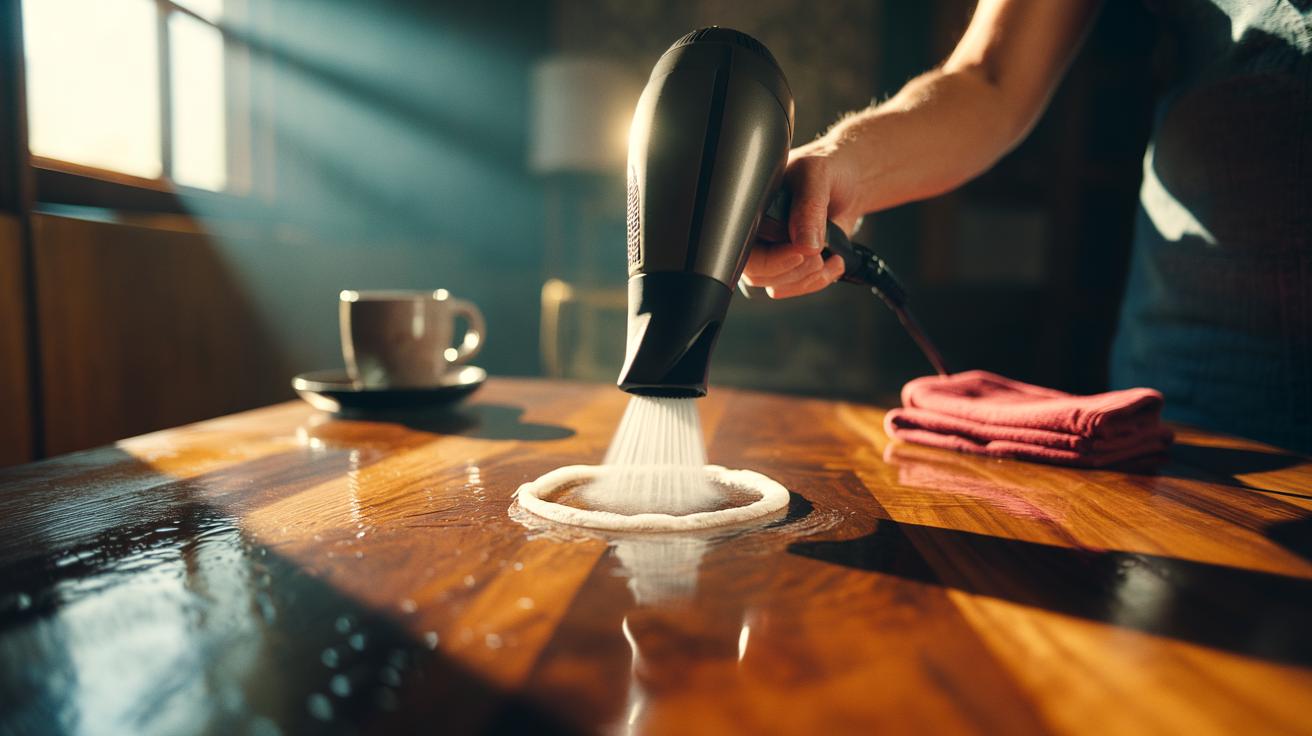
First, prep the scene. Wipe the table free of dust with a microfibre cloth. Plug in a hairdryer with variable settings and choose low heat, low to medium airflow. Good light helps you watch the ring as it shifts from cloudy to clear. Do not use a heat gun; it’s far too aggressive for domestic finishes.
Now the method. Hold the nozzle roughly 15–20 cm (6–8 inches) above the stain. Keep the dryer moving in slow circles around and across the ring, never parking in one place. Work for 30–60 seconds, then pause and buff with the cloth. You’re checking two things: whether the whiteness is fading, and whether the surface is warming evenly without turning sticky or overly glossy. If you feel heat building in one spot, lift off and let it cool.
Repeat the cycle. Warm, pause, buff. Each pass should lighten the mark. If progress stalls, nudge the heat up one notch—but only one. Edges first, centre last, because moisture often concentrates at the perimeter of the ring. On older lacquer or shellac, stay on the cautious side and extend the number of short passes rather than raising temperature. The moment the clouding disappears, stop. Allow the area to cool fully before any aftercare. Overworking a cleared spot risks imprinting a shiny “halo” that’s harder to blend.
Aftercare, Alternatives, and When to Stop
When the ring fades, let the surface return to room temperature. Then buff lightly with a clean cloth and apply a whisper-thin coat of furniture polish or a compatible wax to even the sheen. On oiled finishes, a dab of matching furniture oil can restore depth. Always follow the product’s guidance and avoid silicone-heavy sprays on pieces you may refinish later. Less is more—aim to blend, not to build layers.
If the ring lingers, you can add gentle pressure: slightly warmer air, a longer pass, or a second session after a cooling break. Still no joy? That suggests the moisture has penetrated deeper or you’re dealing with a blackened stain. At that point, stop. Consider professional advice or techniques like oxalic acid for black marks, reamalgamation for old shellac, or spot refinishing. Be especially cautious with veneered tables; adhesives beneath can soften and bubble if overheated. For quick reference, consider these conservative starting points:
| Finish Type | Risk Level | Temp Setting | Distance | Typical Pass |
|---|---|---|---|---|
| Polyurethane (modern) | Low–Medium | Low to Medium | 15–20 cm | 30–60 s, repeat |
| Lacquer/Shellac (older) | Medium–High | Low only | 20–25 cm | 20–40 s, cool, repeat |
| Waxed/Oiled | Medium | Low | 15–20 cm | 20–40 s, re-oil/wax |
| Veneer (any finish) | High | Low | 20–25 cm | Short passes, frequent checks |
Keep the dryer moving; never let hot air sit on one spot. That single habit prevents 90% of mishaps. If in doubt, back off, let it cool, and reassess in daylight. The goal is a quiet rescue, not a heroic intervention.
Handled with care, a humble hairdryer can make a water ring vanish so completely you’ll struggle to remember where it was. You’ve moved moisture out, protected the finish, and restored pride to a surface that anchors daily life. If only all home fixes were this tidy. That said, every table tells its own story—of finishes, age, accidents, and previous repairs. What piece in your home would you most like to revive with this method, and what’s holding you back from giving it a careful, confident try?
Did you like it?4.4/5 (21)