In a nutshell
- 🥿 Adopt a strict shoes-off rule to block outdoor particulates—soil, soot, pollen—at the threshold and keep surfaces cleaner for longer.
- 🚪 Turn the doorway into a dust trap with a coir/rubber outdoor mat, an indoor microfibre mat, an open shoe rack, a bench, and guest slippers for effortless compliance.
- 🧹 Pair the habit with smart cleaning: damp microfibre dusting, sealed HEPA vacuuming of floors and skirting, and routine laundering of rugs, bedding, and soft furnishings.
- 🌬️ Improve indoor air: cut fine particles that feed dust mites, manage humidity at 40–50%, and ventilate purposefully—especially helpful in older homes and sealed modern flats.
- 📅 Keep a simple cadence: vacuum and launder mats weekly (indoor at 40–60°C), dry shoes promptly, and replace vacuum bags early to extend time between deep cleans.
Dust settles faster than chores get done. You wipe, it returns. You vacuum, it drifts back as if summoned. The culprit isn’t only the air; it’s what you carry across the threshold. The simple, often overlooked habit that keeps a home dust‑free for longer is a strict shoes‑off rule at the door. It sounds basic. It is. Yet the impact is outsized, because it stops grit, soil, pollen, and industrial particulates before they grind into carpets and float onto shelves. Block the entry point and you extend the time between deep cleans. Here’s how and why that single decision changes the texture of daily life indoors.
The Overlooked Habit: A Strict Shoes-Off Rule
Think of footwear as a delivery service for grime. Every tread picks up roadside dust, brake residue, pollen husks, microscopic tyre fragments, and plain old soil. Step inside and the friction of movement releases those particles. A shoes‑off policy halts that flow at the door. Simple ritual, big dividend. It’s easier to prevent dust than to chase it room by room.
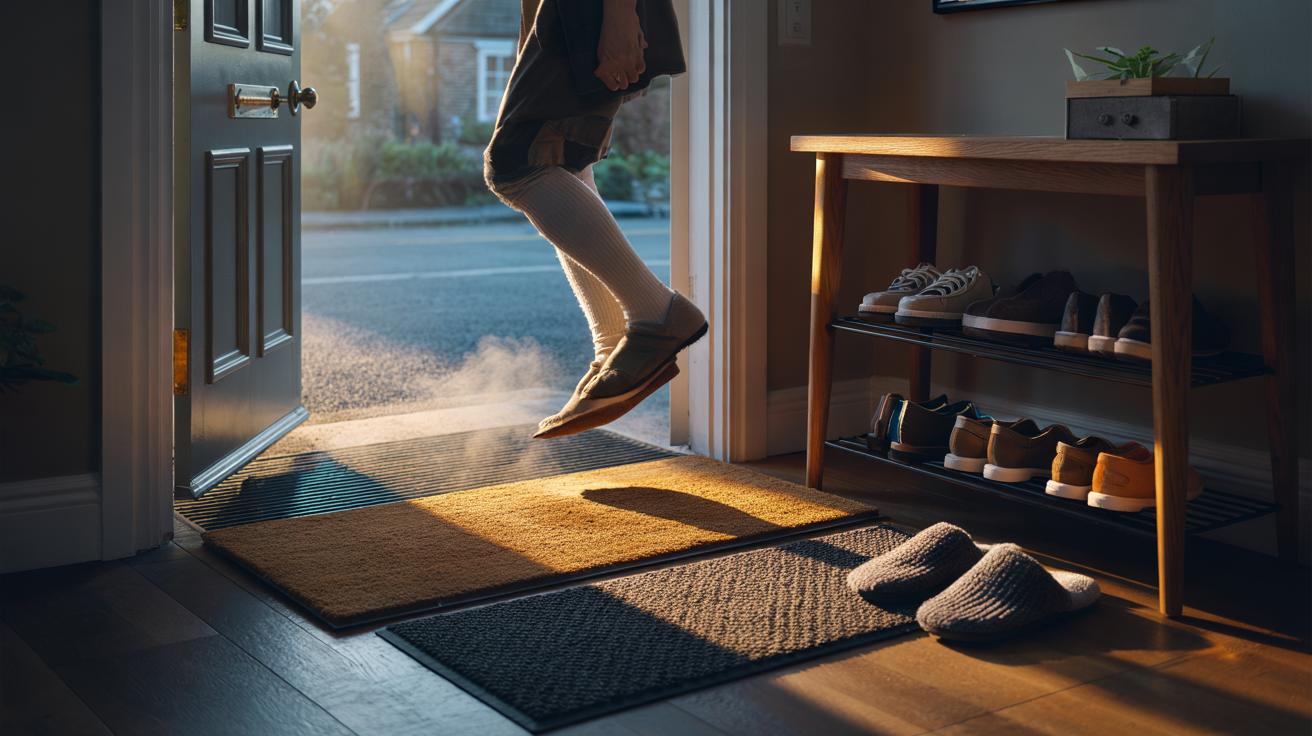
For the habit to stick, remove friction. Place a visible rack next to the entrance and a bench for quick changes. Offer washable slippers for guests. Put a mat outside and a second, softer mat inside. Then make the rule explicit: no shoes beyond the threshold, ever—post‑party, mid‑delivery, even “just popping in.” Consistency is the engine here. When the first two square metres capture debris, the rest of the house breathes easier. You’ll notice shelves stay cleaner. Floors feel smoother underfoot. And your vacuum bag, suddenly, lasts.
Why Footwear Drives Dust Indoors
Household dust isn’t one thing; it’s a cocktail. Yes, there are skin flakes. But the bulk is often outdoor particulate matter hitchhiking on soles and fabric hems. UK pavements carry mineral grit, soot from diesel exhausts, brake and tyre wear, and construction dust. Add spring pollen and summer soil. Each step indoors shears off fine particles that drift, settle, and re‑suspend when you walk past. What lands on the doormat never lands on your bookshelves.
Humidity and heat amplify the issue. Moist particles from rain or morning dew cling to grooves in rubber, then dry and powder like talc once inside. The lighter the particle, the longer it lingers in the air column, floating through sunbeams and onto picture frames. A shoes‑off habit reduces not only visible grit but also the invisible load that feeds dust mites and irritates sensitive airways. In older homes without mechanical ventilation—or in modern flats with sealed windows—this matters. You’re not just tidying; you’re lowering the baseline of airborne pollution within your own four walls.
Turn Your Entrance Into a Dust Trap
To make the habit effortless, design the threshold as a buffer zone. The aim: capture, contain, and clean. Install a stiff coir or rubber scraper mat outside to remove clumps and grit. Inside, use a dense, washable microfibre mat to grab fine particles. Keep a low, open shoe rack and a small bench or stool to sit on. Add a lidded box for wipes and a hook for a handheld brush. Everything within arm’s reach. If the clean option is the easiest option, you’ll choose it every time.
Consider this quick guide for an entrance that works as hard as you do:
| Item | Role in Dust Control |
|---|---|
| Outdoor coir/rubber mat | Scrapes off heavy grit before the door opens |
| Indoor microfibre mat | Traps fine particles; machine washable |
| Open shoe rack | Encourages immediate shoe removal and air‑drying |
| Bench or stool | Speeds up the changeover, improves compliance |
| Guest slippers | Makes the rule hospitable and universal |
Keep a weekly routine: vacuum both mats with a HEPA machine and launder the indoor one at 40–60°C. In wet weather, elevate shoes briefly to dry; damp soles shed more dust as they harden.
Cleaning Routines That Complement the Habit
A shoes‑off policy slashes incoming dust, but pairing it with smart maintenance keeps the lead. Dust with a slightly damp microfibre cloth, not a feather duster. Dry dusting just swirls particles back into circulation. Vacuum high‑traffic areas twice weekly with a sealed HEPA unit; hard floors first, then skirting boards. Swap vacuum bags before they’re packed tight to preserve suction. Capture, don’t redistribute.
Launder textiles that act like filters—rugs, cushion covers, throws—on a schedule. Bedding deserves special attention: washing pillowcases and sheets weekly starves dust mites of food, which reduces the fine debris they generate. Manage humidity around 40–50% with brief, purposeful ventilation or a dehumidifier in damp rooms; mites and mould both falter at that range. If you have pets, keep a towel by the door to wipe paws and a brush for quick coat maintenance. The cumulative effect is striking. With less new dust arriving via shoes, every other task stretches further. Clean once, enjoy longer.
One habit, outsized results. A firm shoes‑off rule, supported by a well‑designed entrance and a few efficient routines, keeps dust where it belongs—outside. You spend less time chasing fluff and more time enjoying rooms that actually feel settled. The shift is cultural as much as practical, but it’s contagious; guests adapt, family follows, and your home quietly transforms. Stop the dirt at the door and the rest gets easier. Will you try a stricter door policy this week—and what small changes would make it effortless for everyone who crosses your threshold?
Did you like it?4.6/5 (27)