In a nutshell
- 🧺 Wash for loft: use less detergent, skip liquid softeners, add vinegar resets for UK hard water, and shake post-wash to lift cotton loops for a true hotel finish.
- 🌀 Dry smart: medium tumble with dryer balls, pull while slightly damp, shake, then finish gently; target GSM 500–700 towels and avoid over-drying that bakes fibres stiff.
- 🧻 Master the Spa Roll: fold a lip, overlap sides, roll with light pressure, and tuck to lock—curved layers preserve airflow and prevent crease-flattened pile.
- 📚 Shelf-perfect Tri-Fold: create a long strip, fold into thirds, hide seams, and alternate stack orientation with a “presentation edge” to optimise linen rotation and reduce compression.
- 🔄 Store and rescue: leave gaps for airflow, rotate weekly, use desiccants in closed cupboards, and refresh flat towels with a quick tumble plus a damp cloth; bicarb/vinegar clears residue.
Ever wondered why hotel towels feel cloud-soft yet stack like architecture? It is not sorcery. It is method. The professional routine starts long before the towel meets a shelf, and it ends with a fold designed to preserve loft while looking immaculate. In UK homes, hard water and crowded cupboards often defeat plushness. But a few disciplined changes deliver that hotel finish. Wash for loft, dry for bounce, fold for airflow. Simple. The secret is working with the towel’s loops, not against them. Here is a step-by-step journalist’s guide, road-tested with housekeepers and laundry managers, for towels that stay fluffy, not flat.
Prep Towels like a Hotel Laundry
Fluff begins in the wash. Use less detergent than you think; too much leaves residue that mats loops. Skip liquid fabric softeners altogether. They coat fibres and crush the pile. Instead, add a small cup of distilled white vinegar every few washes to dissolve build-up, particularly useful in Britain’s limescale-prone hard water. Wash whites at 40°C for routine loads; go to 60°C occasionally for hygiene. Shake each towel vigorously as it comes out of the machine. That snap aerates the cotton loops and preps the nap for drying. Small detail, big difference.
Drying makes or breaks fluff. Tumble on medium with wool dryer balls or clean tennis balls to separate fibres and speed moisture release. Remove while just shy of bone dry and shake again. Then, finish with a short, low-heat burst or air-dry flat to cool the fibres in a lifted state. Over-drying bakes towels stiff. Under-drying leaves them limp. Balance is everything. If you buy new towels, check the label: 500–700 GSM balances plushness and quick drying, a sweet spot many hotels favour.
The Classic Spa Roll: Neat, Plush, Space-Smart
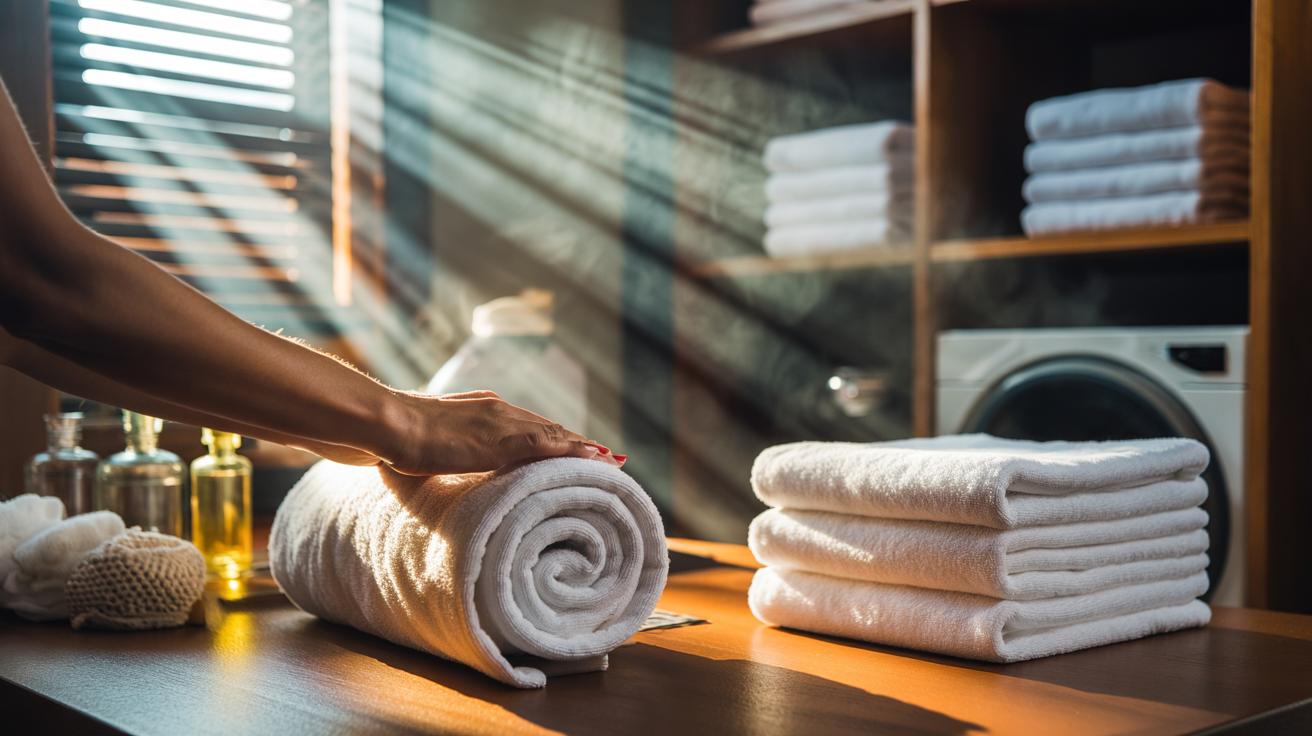
Rolling is not only for shelf theatre; it protects pile. Lay the towel flat, tag side up, and smooth gently with your hands. Fold the bottom edge up by a few inches to create a tidy lip. Bring the left edge to the centre, then the right over it, overlapping slightly so edges vanish. Starting from the short side without the lip, roll with calm pressure. Not too tight. Not loose either. Compression kills loft; structure preserves it. When you reach the end, tuck the lip over the roll to lock it closed. It looks spa-grade because it is.
Why it keeps towels fluffy: a roll presents curved surfaces to air, preventing hard creases that flatten fibres. It also reduces friction when you grab one from a stack. Store rolls upright like bottles or horizontally with the tuck down. For small bathrooms, this method exploits vertical space while maintaining airflow around the loops. Bonus: If you’re displaying guest towels, align the seam at the back for a clean front face. The habit takes seconds and pays off months later when the towel still feels billowy.
The Tri-Fold Stack for Shelf-Ready Symmetry
Hotels love the tri-fold because it delivers symmetry and speed. Start with the towel face down. Fold one long side two-thirds across, then bring the other side on top to form a long, even strip. Smooth gently. Fold the strip in half from the short end, then into thirds, forming a compact rectangle with concealed edges. Always hide seams; visible seams read messy on a shelf. Keep pressure light; allow micro-gaps between layers so air can circulate. You’re building a breathable stack, not a pressed shirt.
Stack with the folded “presentation edge” facing out. Alternate directions every other towel to distribute weight and avoid long-term compressive spots. Leave a finger’s width of space between stacks and never overload a narrow shelf. This fold excels for bath sheets, hand towels, and face cloths because it standardises dimensions, making linen rotation effortless. If you want extra buoyancy, fluff the towel with a quick two-second shake before placing it down. Small ritual. Big return. The result is a pile that looks editorial yet feels springy the moment it unfurls.
Storage, Rotation, and Quick Rescue Tactics
Even the best fold fails in a suffocating cupboard. Give towels space. Use open shelving or baskets that allow air to pass; avoid cramming into plastic bins. Rotate weekly: oldest on top into service first, newest to the back. Rotation prevents “bottom-of-the-stack fatigue”. If a towel feels flat, toss it in the dryer for five minutes with dryer balls and a damp microfibre cloth to steam-in bounce. For stubborn stiffness, wash with a tablespoon of bicarbonate of soda, rinse thoroughly, then dry with patience. And never store towels while warm; trapped heat equals trapped moisture and crushed nap.
| Action | Why it Keeps Towels Fluffy |
|---|---|
| Leave shelf gaps | Airflow prevents permanent compression and musty odours |
| Alternate stack orientation | Distributes weight, reduces crease points |
| Weekly rotation | Even wear across loops, longer-lasting loft |
| Quick tumble refresh | Re-lifts fibres without a full wash |
| Vinegar/bicarb resets | Removes residue that mats the pile |
For tiny flats, hang a narrow rail above a radiator and space towels, or choose ladder shelves that breathe. If you must use a closed cupboard, add a small desiccant pack on the back wall and avoid stacking above chest height where heat builds. Air is the friend of fluff. So is restraint.
Master the wash, the dry, and the fold, and your towels will serve like they do in five-star suites: plump, clean, and ready. The hotel way is not fussy; it is consistent. A ritual that respects fabric science and real-life schedules. Change one habit this week—skipping softener or leaving shelf gaps—and you will feel the difference. Which technique will you try first, and how might you adapt it to your bathroom’s space and routine?
Did you like it?4.4/5 (28)