In a nutshell
- 🧼 Prioritise gentle methods to protect tempered glass and indoor air quality; skip harsh chemicals in favour of food-safe staples like bicarbonate of soda and distilled white vinegar.
- 🧪 Follow a clear method: make a 3:1 bicarb paste, allow 20–45 minutes dwell, mist with vinegar, and lift residue with a non-scratch scraper and microfibre cloth—never rush the dwell time.
- 🍋 Use eco alternatives for stubborn spots: lemon steam to soften grime, a warm washing-up liquid soak, and a pinch of fine salt for mild abrasion—then finish with a vinegar spritz and buff.
- 🧤 Build preventative habits and observe safety basics: wipe while lukewarm, use reusable liners, avoid abrasives, cool the oven fully, and check the manual before removing doors or panels.
- 💡 Enjoy practical payoffs: a streak-free shine, fewer fumes, lower costs, and repeatable results that keep your glass clear—and your kitchen air fresh—without caustic cleaners.
Cleaning the oven door glass needn’t choke the kitchen with chemical fumes or strip the glass of its protective sheen. With a few pantry staples and a patient, methodical approach, you can lift the brown haze, cut through baked-on splatters, and restore genuine clarity. The trick is technique, not brute force. Bicarbonate of soda, a little distilled white vinegar, and a steady hand are often all that’s required. You’ll save money, protect sensitive lungs, and avoid harsh residues that can taint the aroma of your next roast. Always test a small corner first, then scale up once you’re confident. Clear glass, calmer cleaning, fewer chemicals—let’s get started.
Why Gentle Methods Matter
Oven doors are usually made from tempered glass, sometimes with specialised coatings that reduce glare or resist grease. Harsh sprays and metal scourers scratch these surfaces, creating tiny grooves that trap grime and dull the finish. Once the surface is marred, there’s no easy way back. Beyond aesthetics, there’s air quality. Caustic cleaners can release strong odours that linger in a sealed kitchen and cling to soft furnishings. If you have pets, children, or asthma, that’s a risk you don’t need to take when gentle, food-safe ingredients often do the job perfectly well.
There’s also the residue issue. Many commercial formulas require painstaking rinsing to ensure nothing remains on handles, seals, or vents. Miss a patch and you may notice a strange smell the first time you heat the oven. By contrast, bicarbonate of soda and vinegar break down into simple salts and water, leaving little to worry about. Economically it stacks up, too. A tub of bicarb costs pennies per clean and stores indefinitely. The smartest clean is one you can repeat safely, season after season, without damaging the door or your lungs.
Step-by-Step: The Bicarbonate and Vinegar Method
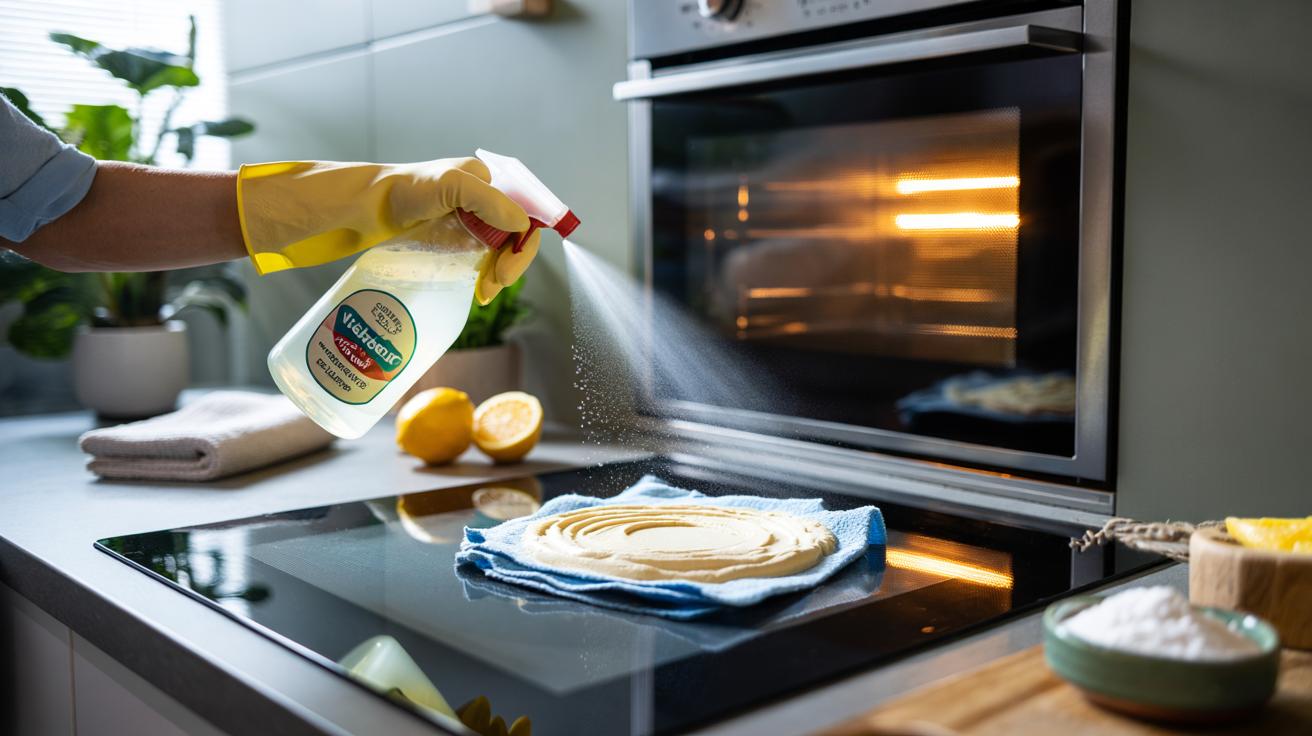
Start with a cool appliance. Remove loose crumbs with a dry microfibre cloth so you’re not grinding grit into the glass. Mix a paste: roughly 3 parts bicarbonate of soda to 1 part warm water. Aim for yoghurt-thick. Spread the paste over the inner glass, avoiding any vent slots or electrical contacts. Work it gently with a soft cloth. Leave it to sit for 20–30 minutes; for stubborn specks, go to 45 minutes. Do not rush the dwell time—this is where the chemistry does the heavy lifting.
Lightly mist the surface with distilled white vinegar. The fizz signals the neutralising reaction, which helps lift polymerised grease. Use a non-scratch scraper (plastic or a dedicated glass scraper at a shallow angle) to coax off softened deposits. Wipe with a clean, damp microfibre cloth, rinsing the cloth often. Repeat the paste on persistent spots rather than scrubbing harder. Around the edges, fold the cloth to a crisp corner to avoid catching the seal. Never gouge at the glass; patience outperforms pressure.
Finish with a few drops of washing-up liquid in warm water to remove any film, then a final buff using a dry microfibre or lint-free towel for a streak-free shine. If you can safely remove the door (some models have hinge locks), lay it flat on a towel for better control, but always check your manual first. Important: never mix vinegar with any cleaner containing bleach or ammonia.
Alternative Eco-Friendly Options for Stubborn Stains
Every oven accumulates a few baked-on offenders—sugar drips from desserts, caramelised cheese, splattered oil. When the classic paste needs a wingman, mild, eco-friendly tweaks help. A lemon-steam pre-treatment softens grime: halve a lemon, place it in an oven-safe dish with water, and heat the oven to low for 15–20 minutes. Let it cool, then tackle the glass; the vapour loosens residue and neutralises odours. For sticky patches, a washing-up liquid and hot water soak—applied with a warm, wrung-out microfibre—often breaks the bond. A tiny pinch of fine salt adds gentle abrasion, but keep it minimal to avoid scratching.
| Method | Ingredients | Contact Time | Best For | Notes |
|---|---|---|---|---|
| Bicarb Paste | Bicarbonate + water | 20–45 mins | General grease, haze | Non-scratch, repeatable |
| Vinegar Mist | Distilled white vinegar | 1–3 mins | Mineral film, streaks | Use after bicarb to neutralise |
| Lemon Steam | Lemon + water | 15–20 mins | Baked-on odours, light grime | Let oven cool before wiping |
| Soap Soak | Washing-up liquid + hot water | 10–15 mins | Tacky, sugary residue | Rinse cloth often |
For heavy, caramelised spots, apply a small dab of thick bicarb paste just to the stain, cover with a piece of damp kitchen towel to keep it moist, and leave for an extra half-hour. Then lift with a plastic scraper. If you’re reaching for anything sharper, stop—scratches are forever. Finish with a vinegar spritz and dry buff. Simple, safe, and reliably effective.
Preventative Habits and Safety Basics
The easiest clean is the one you don’t need. Wipe the glass lightly with a damp microfibre while the oven is lukewarm, not hot, after roasting—residue shifts more easily before it hardens. Use a reusable oven liner on a lower shelf to catch drips (never cover vents or the oven floor). Keep roasting trays proportionate, and tent fatty cuts to reduce spatter. Avoid abrasive pads or powdered scourers; they create micro-scratches that invite future grime. Good habits mean quicker cleans and less elbow grease every time.
Safety first. Turn the appliance off and allow it to cool fully before starting. If gas, confirm the flame is out; if electric, switch off at the wall. Consult your manual before removing any panels, as some doors have double glazing you can safely access, while others should remain sealed. Work with plenty of light so you can see residue rather than guess at it. Wear thin gloves if you have sensitive skin, and keep tools simple: microfibres, a plastic scraper, a spray bottle, and your bicarb-vinegar duo. When in doubt, gentler pressure and longer dwell time beat aggressive scrubbing.
A sparkling oven door makes every bake feel better, and you don’t need caustic cocktails to get there. With bicarbonate of soda, vinegar, a measured pause, and a careful wipe, glass clarity returns without stinging eyes or scratched surfaces. Save the budget, protect the planet, and keep your kitchen air fresh. Make maintenance a habit and deep cleans become easy weekend jobs rather than dreaded chores. What tweak or trick—from lemon steam to a perfect microfibre—will you try first to see your own reflection gleam back from the glass?
Did you like it?4.5/5 (27)