In a nutshell
- 🌊 Adopt the 3‑2‑1 watering rhythm: three checks (finger depth, pot weight, leaf posture), two actions (water to 10–20% runoff, drain 10–20 minutes), and one rule—never leave water in the saucer—to prevent root rot.
- 🧪 Use reliable dryness tests: finger and weight checks, calibrated moisture meters, a skewer test for the core, and the smell test; only water when the root zone has begun to dry.
- 🌤️ Make smart seasonal adjustments: keep a weekly check day but vary frequency with light, temperature, pot size, humidity, and airflow; aim for consistent dry‑down and re‑oxygenation.
- 🪴 Follow dryness targets by plant type (aroids, ferns, succulents, orchids, African violets) and adjust for pot and mix—terracotta dries faster than plastic; always prioritise drainage.
- ✅ Expect benefits from deep, infrequent watering: steadier growth, fewer fungus gnats, and no sour compost—thanks to a routine of check, soak, drain, and an empty saucer.
Houseplants don’t die of kindness; they drown in it. The chief culprit is root rot, a silent collapse that follows days of soggy compost and starved oxygen. There’s a fix, and it isn’t an app, a magic potion, or a guess. It’s a simple watering rhythm that fits everyday life, helps any potting mix breathe, and slashes the risk of rot. Think routine, not rules. Check on a set day, water only when the plant asks, and let gravity do the heavy lifting. Water less often, but more thoroughly, than you think. Done right, leaves stay glossy, pots stay light, and roots stay alive.
The 3-2-1 Watering Rhythm Explained
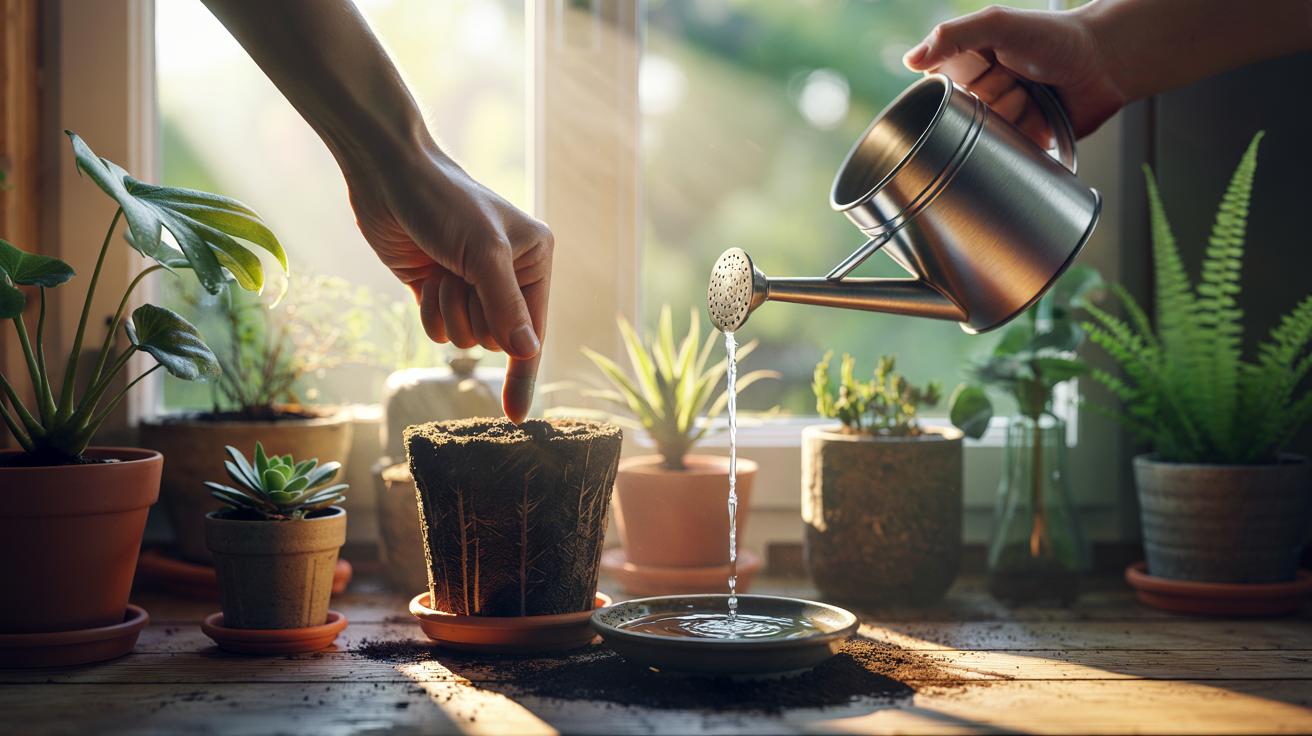
Here’s the rhythm that keeps roots out of trouble. Three checks, two actions, one non‑negotiable. First, the three checks: feel the top 2–3 cm of mix; if it’s dry to the first knuckle, move on. Lift the pot; a dry pot feels strikingly lighter. Glance at leaf posture; perked leaves often mean “not yet”, while slight droop plus dry mix signals “go”. Second, the two actions: water slowly until 10–20% drains from the bottom, then allow a full drain for 10–20 minutes. Finally, the one rule: never leave water sitting in a saucer or cachepot.
This cadence is timed, not rigid. Set a weekly “check day” (say, every Sunday). If the plant passes the dryness checks, water that day; if not, skip and revisit mid‑week. Simple. Repeatable. Effective. You’re training yourself to respond to the root zone, not the calendar. That shift alone prevents chronic wet feet, the prime driver of fungal decay and bacterial rot.
Two more notes. Water at the base, not the foliage, and do it in the morning so leaves and mix can air before night. Deep, infrequent watering beats frequent sips for almost every houseplant.
How to Read the Pot: Tests That Prevent Overwatering
Fingers beat gadgets, but both can help. The finger test is your baseline: if the top layer is cool and clings to your skin, wait; if it feels dusty and breaks apart, consider watering. Train your arm with the weight test: weigh the pot in your hands when freshly watered, then again when almost dry. After a month, you’ll know dry versus saturated by feel alone. If you use a moisture meter, calibrate it once by testing the probe in both wet and near‑dry mix for your specific plant and potting blend.
A wooden skewer or chopstick is brilliant for deeper checks: insert, leave for five minutes, then remove. Damp marks mean the core is still wet. Smell helps too; healthy mix smells earthy, while sour or mushroomy notes hint at low oxygen and the early stages of rot. Only water when the root zone, not just the surface, has started to dry. That distinction is everything. Pair these signals with the 3‑2‑1 rhythm and you’ll stop watering by habit, which is how most rot begins.
Seasonal Adjustments and Room Conditions
Plants don’t sip at the same pace all year. In a bright British summer window, transpiration accelerates; in a dim winter lounge, it slows to a crawl. Keep your weekly “check day”, but expect different outcomes: many tropicals will need water every 5–7 days in summer, then every 10–21 days in winter. Temperature, light, pot size, and humidity all sway the rhythm. Warm room, small terracotta pot, airy mix? Faster drying. Cool room, large plastic pot, dense compost? Slower. Your rhythm adapts to the room, not the calendar.
Airflow matters. A gentle fan or cracked window speeds evaporation and curbs spores. Morning watering reduces overnight humidity spikes around foliage. In rooms with low winter light, pull plants closer to the brightest pane and clean leaves so stomata can breathe. Salt build‑up from fertiliser can hold water; flush the mix with a thorough drench every six to eight weeks during active growth. The goal is consistent dry‑down and re‑oxygenation between waterings, which keeps beneficial microbes active and pathogens at bay.
Quick Reference: Dryness Targets by Plant Type
The rhythm is universal, but dryness targets differ. Tropical aroids like monstera prefer a partial dry‑down; ferns sulk if they go crisp; succulents demand almost complete dryness. Use these ranges as a starting point, then let your tests refine the timing. If leaves lose sheen or edges crisp while the mix is drying fast, water sooner. If petioles flop while the core is still wet, you’ve gone too soon. Err on the dry side for thick, succulent roots; err on the barely‑dry side for fine, fluffy roots.
Container choices tweak the cadence. Terracotta wicks moisture and speeds the cycle. Plastic and glazed ceramic slow it. Chunky mixes with bark and perlite dry faster than peat‑heavy blends. Always choose a pot with drainage holes, and if you love a decorative cover pot, keep an eye on trapped runoff. Here’s a compact guide to match plant types with sensible dry‑down targets and expected rhythms in a temperate UK home.
| Plant Type | Dryness Before Watering | Spring/Summer Rhythm | Autumn/Winter Rhythm | Notes |
|---|---|---|---|---|
| Tropical aroids (Monstera, Philodendron) | 40–60% of mix dry | Every 5–9 days | Every 10–18 days | Use airy mix with bark and perlite. |
| Ferns, Calatheas, Marantas | 20–40% of mix dry | Every 4–7 days | Every 7–12 days | Keep humidity up; shallow dry‑downs only. |
| Succulents and cacti | 80–100% of mix dry | Every 10–21 days | Every 21–35 days | Bright light; gritty, free‑draining mix. |
| Orchids (Phalaenopsis) | 60–80% of bark dry | Every 7–10 days | Every 10–20 days | Flush thoroughly; never sit in water. |
| African violets, flowering indoor plants | 40–50% of mix dry | Every 5–8 days | Every 8–14 days | Bottom‑water, then drain well. |
If you keep to the 3‑2‑1 rhythm—checks, soak, drain, and an empty saucer—you’ll notice steadier growth, fewer fungus gnats, and a conspicuous absence of sour‑smelling compost. The routine is liberating because it removes guesswork while respecting what each plant and pot actually do in your home. Roots want water, air, and time between the two. Give them that cadence and they’ll do the rest. What will you change first: your check day, your potting mix, or the way you read a plant’s thirst?
Did you like it?4.3/5 (23)